
Start With the Food, Not the Paperboard
Choosing the right paperboard for food packaging starts with understanding the food itself. A material's name or thickness alone cannot determine whether it is suitable. Food contact, moisture, fat content, storage temperature, and contact duration all influence packaging requirements.
Identify Whether the Box Touches the Food
|
Contact Type |
Example |
What to Check |
|---|---|---|
|
Direct contact |
Bakery box holding pastries |
Food-contact surface, grease resistance, intended use |
|
Inner bag |
Cereal carton with sealed bag |
Inner bag material, seals, potential transfer |
|
No direct contact |
Shipping carton |
Packaging integrity, potential transfer to primary packaging |
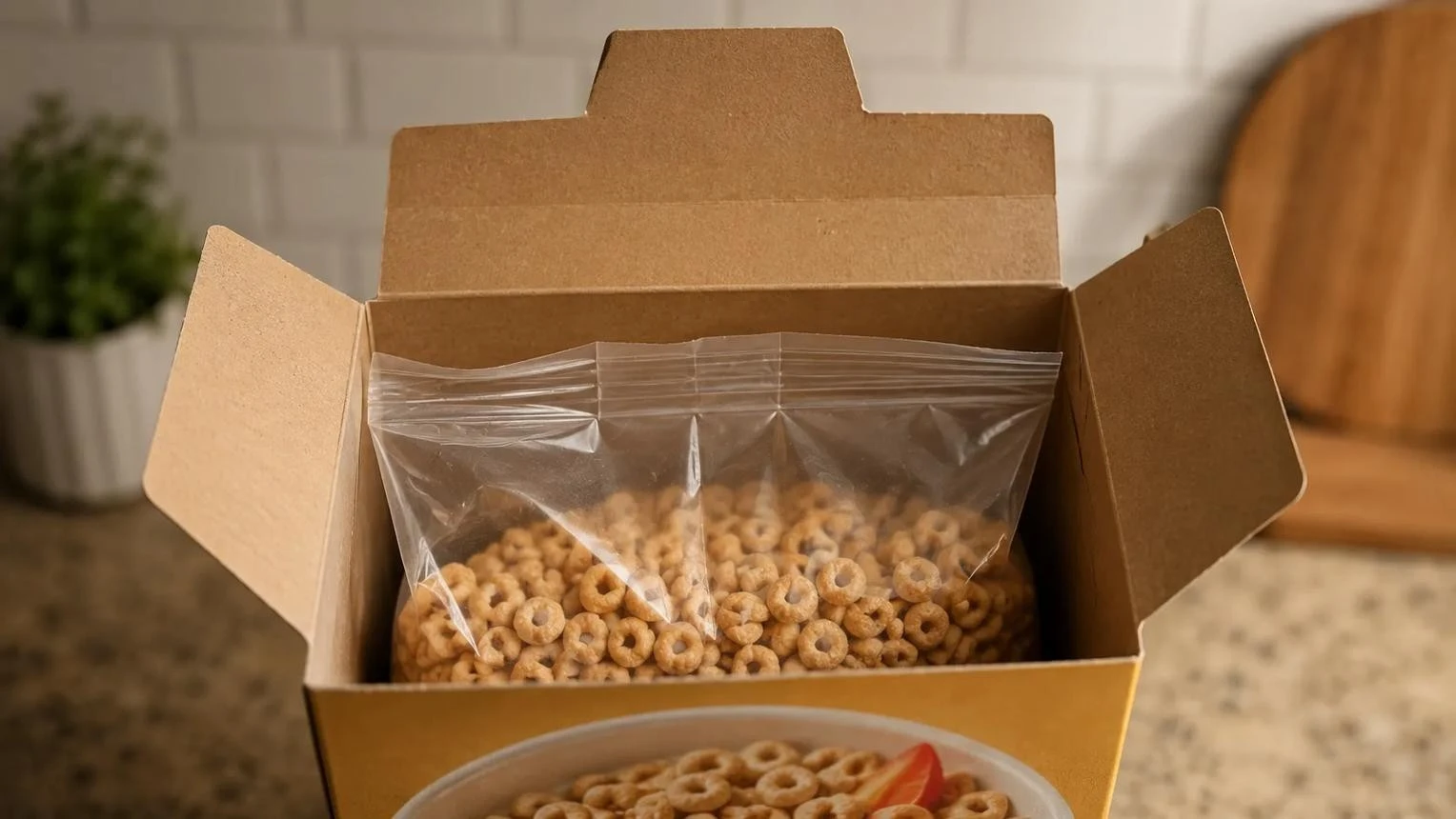
First, determine whether the paperboard directly touches the food. Direct-contact packaging, such as certain bakery boxes, requires materials suitable for that specific use. Secondary packaging, such as cereal boxes with sealed inner bags, has different requirements.
However, an inner bag does not automatically eliminate all migration risks. Its material, seals, and barrier properties must also be considered.
Check the Food's Moisture, Fat and Acidity
Different foods require different packaging properties. Dry snacks may need moisture protection, while greasy foods often require grease-resistant barriers. Wet or acidic foods may need additional protection and compatible food-contact materials.
For example, a box suitable for dry cookies may not work for oily pastries, even if both boxes have the same thickness. Food characteristics should guide material selection, not appearance or thickness alone.
Define Storage Time and Temperature
Storage conditions also affect packaging suitability. Refrigerated and frozen foods may require moisture-resistant structures, while hot foods need materials evaluated for their intended temperature and contact duration.
A paperboard box suitable for room-temperature storage is not necessarily microwave-safe. Always confirm that the packaging is appropriate for its intended use.
Packaging Requirements Checklist
Before selecting paperboard, confirm:
Food type and moisture or fat content
Direct or indirect food contact
Storage temperature and duration
Target market and applicable requirements
Expected shelf life
Food acidity and sensitivity to odors
Hot filling, reheating, or microwave use
Whether an additional food-contact barrier is required
These details will help narrow down suitable paperboard materials and packaging structures in the next step.
Compare Paperboard Materials by Their Intended Use
Choosing the right food-safe paperboard materials depends on the food type, contact conditions, and storage requirements. Different paperboards offer different benefits, but no material is automatically food-safe. Each option must be evaluated for its intended use.
Virgin-Fiber Paperboard
Virgin-fiber paperboard is made from new wood fibers and is commonly used in food packaging. Solid Bleached Sulfate (SBS) paperboard offers a smooth surface, good print quality, and reliable folding performance, making it suitable for many retail food cartons.
However, virgin fiber does not automatically guarantee food-contact safety. Coatings, additives, and intended contact conditions must also be checked against supplier documentation.
Kraft and Uncoated Paperboard
Kraft paperboard is valued for its strength and natural appearance, while uncoated paperboard refers to paperboard without a surface coating. Both can be used for dry food packaging and outer cartons.
However, a natural appearance does not mean a material is food-safe. Packaging that directly contacts greasy or moist foods may require an additional food-contact layer or barrier.
Recycled Paperboard
Recycled paperboard is widely used in secondary food packaging. However, recycled fibers may contain residual substances, including mineral oil hydrocarbons, depending on their source and processing.
It can be suitable for certain food packaging applications, particularly when an appropriate inner liner or functional barrier is used. The complete structure must be evaluated under its intended food-contact conditions.
Barrier-Coated and Lined Paperboard
Barrier-coated paperboard uses surface treatments to improve properties such as grease and moisture resistance. Laminated paperboard includes an additional bonded layer, while lined cartons may use a separate inner bag to protect the food.
These structures serve different purposes. Their food-contact suitability depends on the barrier material, packaging design, and actual use conditions. A barrier coating alone does not guarantee food-contact compliance.
Paperboard Material Comparison

|
Material |
Potential Applications |
Main Advantages |
What to Verify |
|---|---|---|---|
|
Virgin-fiber / SBS |
Retail food cartons |
Smooth surface, print quality, folding performance |
Coatings, additives, contact suitability |
|
Kraft / uncoated |
Dry food cartons, outer boxes |
Natural appearance, structural strength |
Fiber source, grease and moisture requirements |
|
Recycled board |
Secondary packaging |
Recycled fiber content |
Potential contaminants, functional barriers |
|
Barrier-coated board |
Moisture- or grease-sensitive foods |
Application-specific barrier performance |
Coating composition, contact conditions |
|
Lined cartons |
Foods requiring separate primary packaging |
Separation of food and outer carton |
Liner suitability, seals, barrier integrity |
Recycled content alone cannot determine food-contact suitability. Buyers should request information on fiber sourcing, potential contaminants, and any functional barrier used in the final packaging structure.
3. Match the Packaging Structure to Your Food Product
Food packaging material selection depends on the product's moisture, fat content, storage temperature, and shelf life. Different foods require different packaging structures, so the right solution should match both food-contact safety and protection needs.
Dry Foods: Cereal, Tea and Snacks
Dry foods often use paperboard cartons with sealed inner bags. For example, a cereal box provides structure and branding, while the inner bag protects the food from moisture and direct contact with the outer carton.
Tea and certain snacks may also require aroma and moisture barriers. Always check the inner packaging material and expected shelf life.
For moisture-sensitive cereals, the inner bag may provide the primary moisture barrier, while the carton supports handling and branding. Tea packaging may require additional protection against odor transfer and aroma loss. Buyers should confirm barrier performance against the expected shelf life.
Bakery Products and Greasy Foods
Bakery food packaging must account for grease and direct food contact. Products such as donuts and buttery pastries can leave oil stains or affect unsuitable packaging surfaces.
A suitable food-contact liner or grease-resistant paperboard coating may help. However, grease resistance alone does not guarantee food-contact safety.
Packaging for short-term bakery takeaway may have different requirements from packaging used for extended retail storage. Buyers should confirm whether grease can reach exposed paperboard surfaces and whether the liner or coating is suitable for the actual food-contact conditions.
Chocolate and Confectionery
Chocolate packaging requires attention to fat content, odour, and storage conditions. An outer paperboard box often provides protection and presentation, while a separate food-contact layer protects the chocolate.
Packaging materials should be evaluated for possible odour transfer and suitability during the intended storage period.
For premium chocolate boxes, a separate primary wrapper or suitable tray may protect the product while the outer carton provides presentation. Packaging selection should also consider odor transfer, flavor preservation, and the expected storage period.
Refrigerated and Frozen Foods
Frozen food paperboard packaging must withstand low temperatures, moisture, and possible condensation. These conditions can affect carton strength, printing, and structural performance.
For example, frozen vegetable cartons may use suitable inner packaging to protect the food. Both the carton and inner packaging should be evaluated under expected storage and transport conditions.
Cartons should be evaluated under expected cold-storage, transportation, and temperature-transition conditions. Particular attention should be given to condensation, carton stiffness, adhesive performance, and possible moisture exposure during handling.
Hot and Ready-to-Eat Foods
Hot food paperboard packaging requires materials suitable for the intended temperature and contact duration. A takeaway box designed for short-term hot food contact is not necessarily microwave-safe.
Before using paperboard for hot filling or microwave heating, verify the temperature limits and suitability of the complete packaging structure.
Hot filling, short-term takeaway, heat holding, and microwave reheating require separate assessments. Buyers should verify the permitted temperature, contact duration, food type, and any heating restrictions before approving the packaging.
Food Packaging Structure Comparison

|
Food Type |
Contact Route |
Candidate Structure |
Main Risk |
Required Verification |
|---|---|---|---|---|
|
Cereal / dry snacks |
Usually through inner bag |
Paperboard carton + sealed inner bag |
Moisture, aroma |
Inner bag suitability, barrier performance, shelf life |
|
Bakery / greasy foods |
Direct or through liner |
Carton + suitable liner or coated contact surface |
Grease penetration, contact suitability |
Grease performance, exposed surfaces, compliance evidence |
|
Chocolate |
Usually through primary packaging |
Outer carton + suitable wrapper or tray |
Odor transfer, flavor changes |
Contact layer, sensory suitability, storage conditions |
|
Frozen foods |
Often through primary packaging |
Moisture-resistant carton + suitable inner packaging |
Condensation, structural weakening |
Cold-storage performance, carton strength, package integrity |
|
Hot ready-to-eat foods |
Often direct |
Validated food-contact carton structure |
Heat, contact duration, grease |
Temperature limits, contact suitability, complete structure |
These are common packaging approaches, not universal food-contact approvals.
4. Understand the Safety Risks Beyond the Base Board
Paperboard packaging safety depends on more than the base material. Printing inks, adhesives, coatings, and box construction can all affect the finished package. These components must be considered when evaluating food-contact suitability.
Printing Inks and Set-Off
Printing inks are usually applied to the outside of food packaging boxes, but they may still present migration concerns.
During printing and stacking, ink components can transfer from the printed surface to another surface, a process called set-off. Low-migration printing inks can help manage this risk, but their suitability depends on the packaging design and production conditions.
During carton production, printed sheets may be stacked before conversion. If the printed surface contacts the side intended for food contact, ink set-off may occur. Buyers should confirm printing positions, ink specifications, and controls used during production.
Adhesives, Coatings and Finishes
Adhesives hold paperboard boxes together, while coatings and finishes improve appearance or provide moisture and grease resistance.
However, food-safe adhesives and paperboard coatings must be suitable for their intended use. Manufacturers should check whether adhesives are exposed, coatings cover the intended contact surfaces, and supporting material documentation is available.
Production checks should identify exposed glue areas, coating coverage, and any restrictions on contact conditions. Supplier documentation should cover the relevant adhesives, coatings, and finishing processes used in the final carton.
Folds, Cut Edges and Barrier Gaps
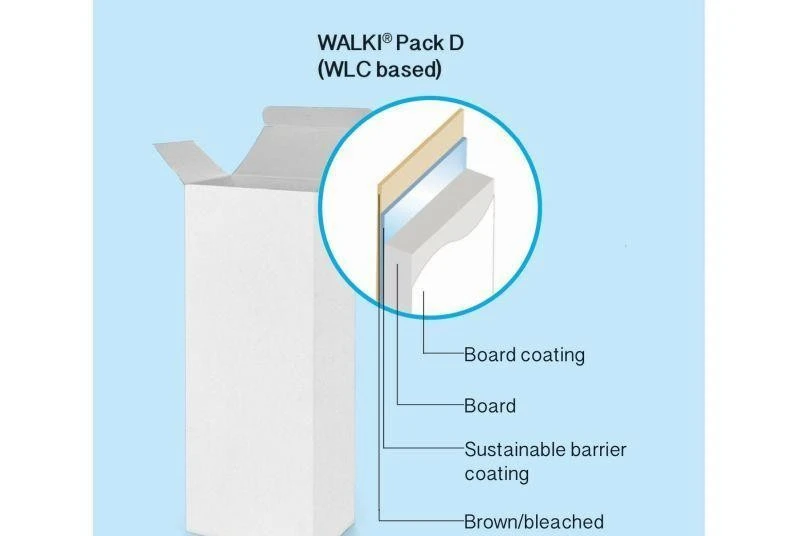
Folding, cutting, and gluing can expose paperboard layers or affect barrier continuity. Areas such as cut edges, glue seams, and liner connections may require additional inspection.
For example, a coated carton may have uncoated edges after die-cutting. During prototyping, manufacturers should check whether food could contact these areas and whether the finished structure performs as intended.
Key takeaway: Even when the base paperboard is suitable, the complete packaging structure-including inks, coatings, adhesives, and construction details-must be evaluated for its intended food-contact conditions.
During sample inspection, check whether folding or die-cutting exposes uncoated paperboard edges. For lined cartons, examine liner positioning, openings, and seams to identify areas where food could contact an unintended surface.
5. Check Food-Contact Compliance in Your Target Market
Food-contact packaging compliance depends on the target market, packaging materials, and intended use. The United States and European Union have different regulatory requirements. Manufacturers should verify that all relevant packaging components meet the applicable rules before production.
U.S. FDA Requirements
In the United States, the FDA regulates substances used in food-contact packaging. 21 CFR Part 176 covers certain paper and paperboard components, while adhesives, coatings, and other materials may fall under different requirements.
For U.S. applications, buyers should identify the applicable regulatory basis for each relevant food-contact component. Certain paper and paperboard uses are addressed under 21 CFR Part 176, while other components may be subject to different provisions or authorizations. Documentation should match the actual food type, temperature, and contact duration.
FDA
Suppliers should provide supporting documentation that matches the food type, contact temperature, and intended use. A general "FDA approved" claim does not automatically establish compliance for every food packaging application.
EU Food-Contact Requirements
In the European Union, Regulation (EC) No 1935/2004 establishes general safety requirements for food-contact materials. Regulation (EC) No 2023/2006 covers Good Manufacturing Practices (GMP), including production controls and quality management.
Regulation (EU) No 10/2011 primarily applies to plastic food-contact materials, not paperboard as a whole. Paperboard packaging may also be subject to applicable national requirements in EU member states.
For multilayer cartons, buyers should identify which requirements apply to each material layer. Plastic components may be subject to Regulation (EU) No 10/2011, while paperboard may require consideration of applicable national rules. The complete packaging design should also be assessed against the general food-contact requirements.
European Commission
Food Safety vs. Sustainability Certifications
Sustainability certifications do not automatically prove food-contact safety.
FSC and PEFC focus on responsible forest sourcing and chain of custody, while BRCGS Packaging Materials addresses packaging safety and quality management systems.
BRCGS
Similarly, recyclable or compostable packaging is not necessarily suitable for direct food contact. Food-contact compliance and environmental claims require separate supporting evidence.
Food Packaging Compliance Comparison
|
Regulation / Standard |
Main Purpose |
Buyer Verification |
|---|---|---|
|
U.S. FDA food-contact requirements |
Applicable food-contact substances and uses |
Regulatory basis, material identity, intended use |
|
EC 1935/2004 |
General EU food-contact requirements |
Safety under intended conditions |
|
EC 2023/2006 |
Good Manufacturing Practice |
Production controls and relevant documentation |
|
EU 10/2011 |
Plastic food-contact materials |
Applicability to relevant plastic components |
|
FSC / PEFC |
Responsible sourcing and chain of custody |
Certification scope and sourcing claims |
|
BRCGS Packaging Materials |
Packaging manufacturing safety and quality management |
Facility certification scope and validity |

Key takeaway:
https://www.fda.gov/food/food-ingredients-packaging/food-packaging-other-substances-come-contact-food-information-consumers
https://food.ec.europa.eu/food-safety/chemical-safety/food-contact-materials/legislation_en
https://www.brcgs.com/our-standards/packaging-materials/
6. Verify the Packaging Before Production
Selecting suitable paperboard is only the first step. Food packaging compliance verification also requires reviewing material documentation, conducting relevant tests, and checking the finished packaging structure. These steps help confirm that the packaging meets its intended use before mass production.
Request Material and Compliance Documentation
Ask suppliers for material specifications, food-contact compliance documentation, relevant test reports, and traceability information.
Check that these documents match the actual packaging materials, food type, contact temperature, and intended use. For example, documentation covering room-temperature storage may not support hot food applications without further evaluation.
Review the material grade, supplier identity, document version, intended food categories, contact conditions, and stated limitations. A report covering room-temperature dry food packaging should not be treated as sufficient evidence for direct contact with hot, greasy food without further assessment.
Determine Which Tests Are Relevant
Packaging tests should reflect the food product and its intended conditions.
Migration testing helps assess potential chemical transfer, while barrier testing evaluates moisture or gas protection. Grease resistance, seal strength, and transport testing may also be needed.
For example, a dry food carton with an inner bag may require different verification from packaging that directly contacts hot, greasy food.
Test the Complete Packaging Structure
Material test results alone may not fully represent the finished box. Printing, folding, gluing, and adding liners can affect the final packaging structure.
During packaging prototype testing, inspect folds, cut edges, glue seams, liners, and food-contact surfaces. Samples should also be evaluated under relevant storage and handling conditions.
For cartons containing inner bags, prototype inspection should include bag positioning, closure integrity, potential contact points, and carton performance after filling. Additional testing should be selected according to the packaging design, applicable requirements, and identified risks.
 Approve the Final Specification
Before production, confirm the approved materials, coatings, inks, adhesives, dimensions, and packaging design. Keep records of the approved sample, supporting documentation, and inspection requirements.
If materials or production processes change, review whether additional verification is necessary before continuing production.
The approved specification should identify the paperboard grade, material supplier, coating system, printing inks, adhesives, dimensions, approved sample version, and relevant inspection requirements. Any significant material or process change should trigger an appropriate review before continued production.
Five-Step Packaging Verification Process
1
Define Intended Use
Confirm food type, contact conditions, temperature, and target market.
2
Select Material Structure
Choose suitable paperboard, coatings, and liners.
3
Review Compliance Evidence
Check supplier documents and applicable requirements.
4
Prototype and Validate
Inspect samples and complete relevant testing.
5
Approve Production
Finalize specifications and control material changes.
Key takeaway: Packaging should be approved for production only after its materials, intended use, supporting evidence, and final structure have been appropriately verified.
|
Verification Objective |
Possible Evaluation |
Decision Focus |
|---|
|
Potential chemical transfer |
Applicable migration testing or chemical safety assessment |
Suitability for the intended food and contact conditions |
|
Moisture and gas protection |
Relevant barrier testing |
Required shelf life and product protection |
|
Grease exposure |
Grease resistance and contact suitability assessment |
Performance and compliance evaluated separately |
|
Sealing performance |
Seal integrity or strength testing |
Package closure reliability |
|
Storage and transport |
Structural and transportation testing |
Finished packaging performance |
7. Questions to Ask a Food Packaging Supplier
Choosing a reliable food packaging manufacturer involves more than comparing prices and minimum order quantities (MOQs). Before ordering custom food packaging boxes, ask suppliers these questions to confirm material suitability, compliance, and production capabilities.
|
Supplier Question |
Expected Evidence or Response |
|---|
|
Can you confirm the intended food-contact conditions? |
Supported food categories, temperature, duration, contact route |
|
Which layer will contact the food? |
Identification of contact surface, coating, liner, or inner bag |
|
Can you provide compliance documentation? |
Applicable declarations, supporting reports, material specifications |
|
Are the inks, coatings, and adhesives suitable? |
Component specifications and relevant suitability evidence |
|
What testing has been completed? |
Material test reports, finished-package evaluations, performance results |
|
How are material changes controlled? |
Change notification and reassessment procedures |
|
Can you provide samples before production? |
Prototype availability, sample approval, production specification process |
Record the supplier's answers, document references, and agreed specifications before approving the packaging design. Any unanswered question affecting food-contact suitability should be resolved before production approval.
8. Final Checklist: Choosing the Right Food-Safe Paper Box
Before ordering food-safe paperboard packaging, follow these five steps:
Define your food requirements: Confirm food type, moisture, fat content, temperature, and shelf life.
Identify the contact layer: Determine whether food touches the paperboard, a coating, or a separate liner.
Compare packaging structures: Select candidate materials based on protection needs and intended use.
Verify compliance: Review applicable documentation, relevant testing, and the finished packaging design.
Approve your supplier: Confirm sample quality, production specifications, and change-control procedures.
Before requesting a quotation, prepare your food type, packaging dimensions, contact conditions, target market, and estimated order quantity.
Discuss Your Food Packaging Requirements
Share your packaging specifications with our team to discuss suitable material options, custom samples, and quotation requirements.