
Tea is one of the most demanding products a packaging factory ever handles. The leaves are fragile, they absorb moisture and odor from the air, and they lose aroma within weeks if the pack is not sealed properly. At the same time, tea is sold on emotion: gifting, ritual, origin stories and calm, botanical branding. That combination of technical barrier requirements and premium shelf appeal is why more tea brands, blenders and private-label retailers are investing in custom tea packaging boxes rather than generic stock containers. This guide walks through the formats that work, the materials and barriers to specify, printing options, and the cost drivers to watch when you order wholesale.
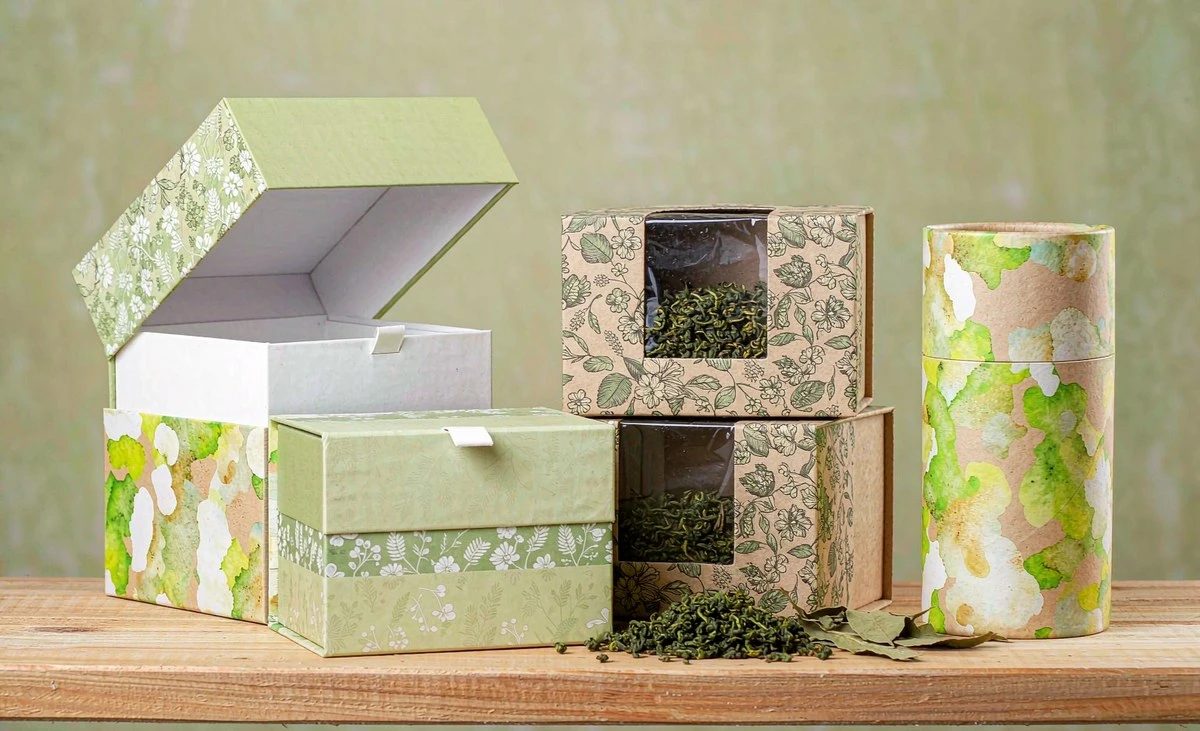
Why Tea Packaging Is Different From Ordinary Food Boxes
A biscuit box mainly has to look good and survive shipping. A tea pack has to do that and protect volatile aromatics. Three properties matter most:
- Aroma retention. Tea oils evaporate quickly through plain paperboard. A barrier layer such as aluminum foil lining, a laminated barrier film, or a sealed inner tin is what keeps the first cup tasting like the hundredth.
- Moisture and odor control. Paper is hygroscopic, and dry tea absorbs surrounding humidity and smells. Airtight lids, zippers or heat-sealed inner liners solve this; a paper shell alone does not.
- Light protection. UV light degrades chlorophyll and dulls green teas. Opaque canisters, foil-lined tubes and solid-color boxes protect far better than clear-front packs.
When you brief a supplier, state which of these matters most for your tea category. A roasted black tea needs less light protection than a first-flush green, and herbal blends with dried flowers need more crush resistance than rolled oolong.
The Four Formats That Dominate Tea Retail
Most custom tea programs are built from the same four building blocks, often combined in one product range:
Paper tube canisters
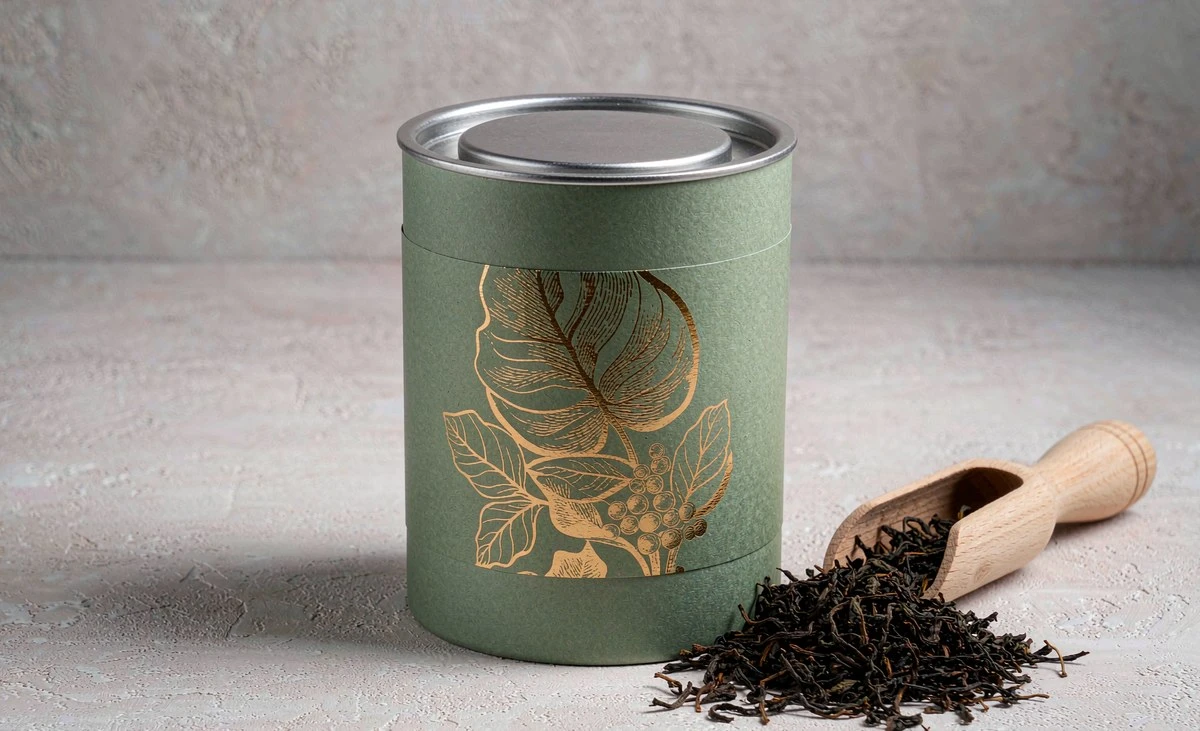
The cylindrical tea canister is the format most customers picture when they think of premium loose leaf tea. A paper tube with a telescopic or plug lid, lined with aluminum foil or food-grade paper, looks substantial in hand and stands out on a shelf of square boxes. Key specifications to decide:
- Diameter and height. Common diameters run from 50 mm for single-serve tubes to 90 mm for 100-150 g of loose leaf. Height drives both tea volume and freight cost.
- Lid type. Telescopic lids slide and seal well; plug lids are cheaper; tinplate lids add weight and a premium click.
- Inner liner. An aluminum foil liner or a removable food-grade inner bag is essential for uncoated paper tubes that touch tea directly.
For a deeper look at how paper tubes are constructed and converted, see our paper tube packaging guide.
Rigid gift boxes with magnetic closure
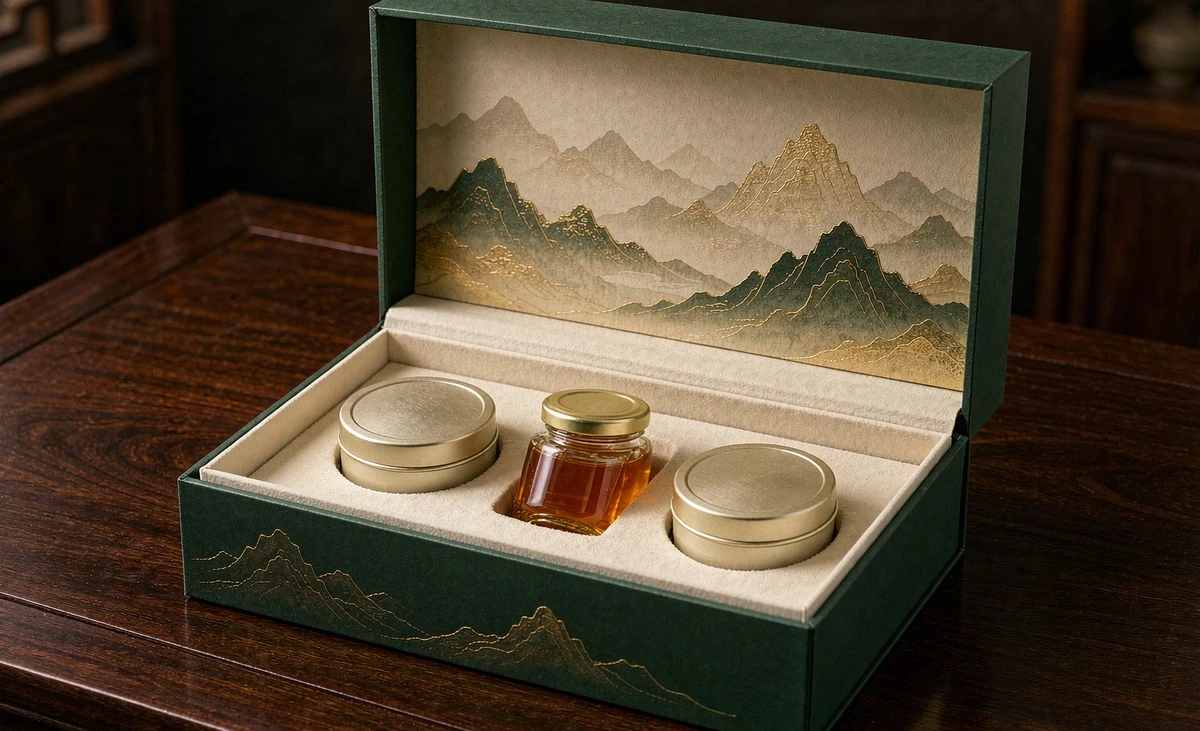
For holiday gifting, corporate sets and gift-with-purchase programs, a rigid magnetic box holding two or three small tins is the format that justifies a higher retail price. The box carries the brand story; the tins carry the tea. Because rigid boxes ship assembled, plan the insert layout early: a recessed cardboard or molded pulp tray stops tins from rattling in transit and turns an ordinary box into an unboxing moment.
Window boxes for tea bags
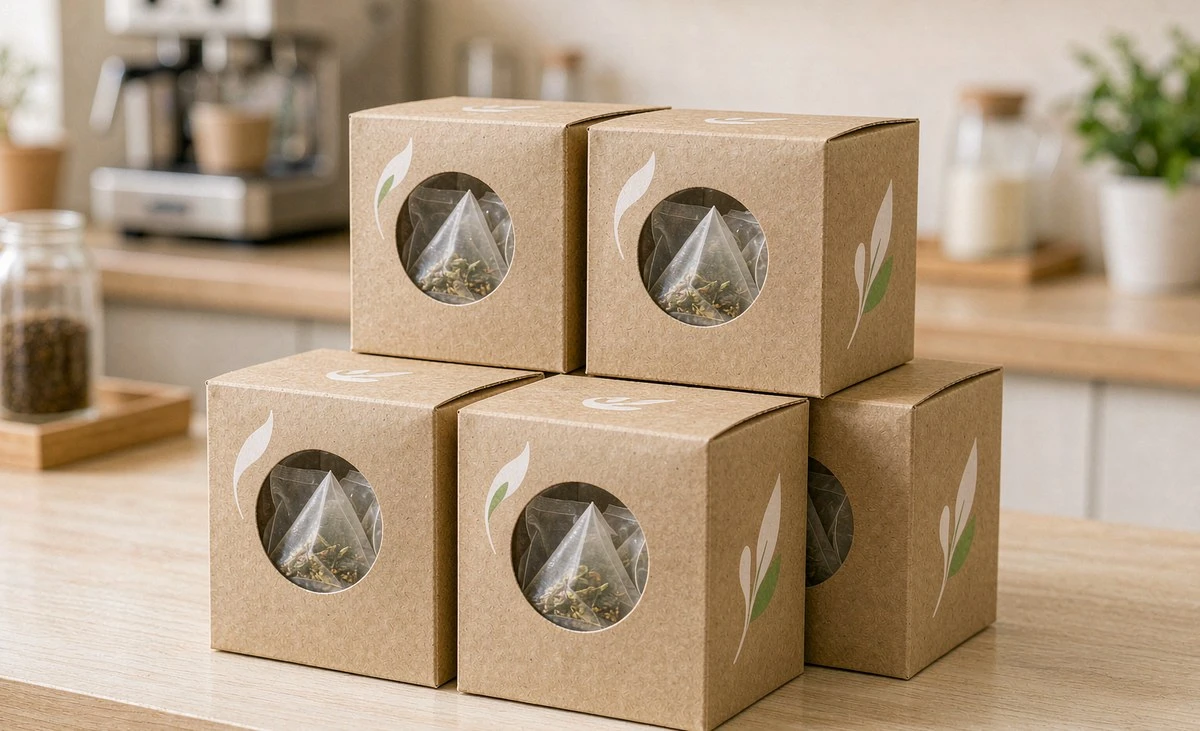
Brands selling pyramid bags or sachets usually choose a folding carton with a die-cut window. The window shows product quality (full-leaf pyramids, not dust bags), while an inner foil sachet per bag handles the actual barrier work. This division of labor lets the carton stay economical: uncoated kraft or recycled board, one- or two-color printing, and a small plastic or PLA window patch.
Flat-bottom and side-gusset pouches
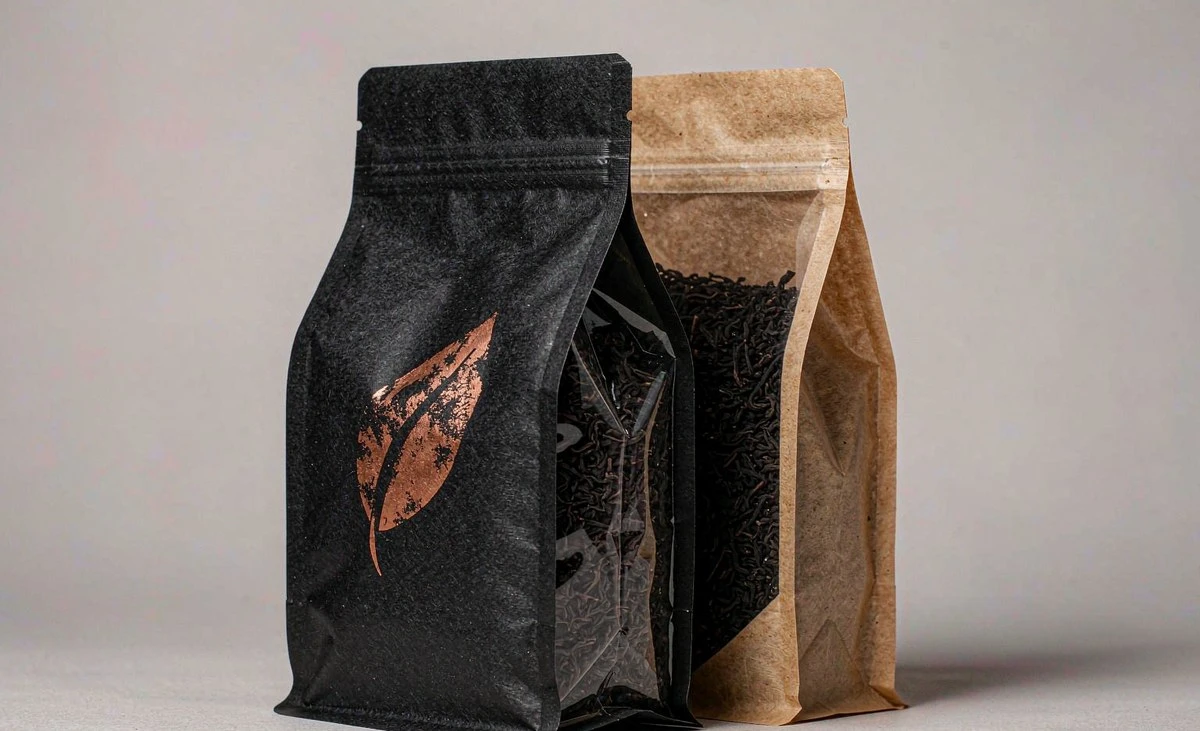
Pouches are not boxes, but nearly every tea range includes one for bulk or refill sales. Flat-bottom pouches stand squarely on retail shelves and accept a resealable zipper; side-gusset pouches are the traditional wholesale format for 250 g and larger fills. Pairing a rigid canister or box for the first purchase with a refill pouch for repeat orders is a proven way to lift repeat revenue.
Materials, Barriers and Food-Contact Compliance
Tea is a food product, so every layer that touches it must be food-contact compliant. In practice, tea rarely touches the paper shell directly: an inner liner, tin or sachet forms the contact layer, while the printed board is the brand layer. When sourcing, ask your supplier for food-contact documentation for the liner materials; in the US market the relevant rules come from the FDA's food contact substances program, and EU buyers will reference framework regulation (EC) 1935/2004. Sustainability claims deserve the same discipline. If certified fiber matters to your brand, specify paper from responsibly managed forests; the FSC certification system is the most widely recognized and can be printed with a license code once your supply chain is certified.
Printing and Finishing That Fit a Calm Brand
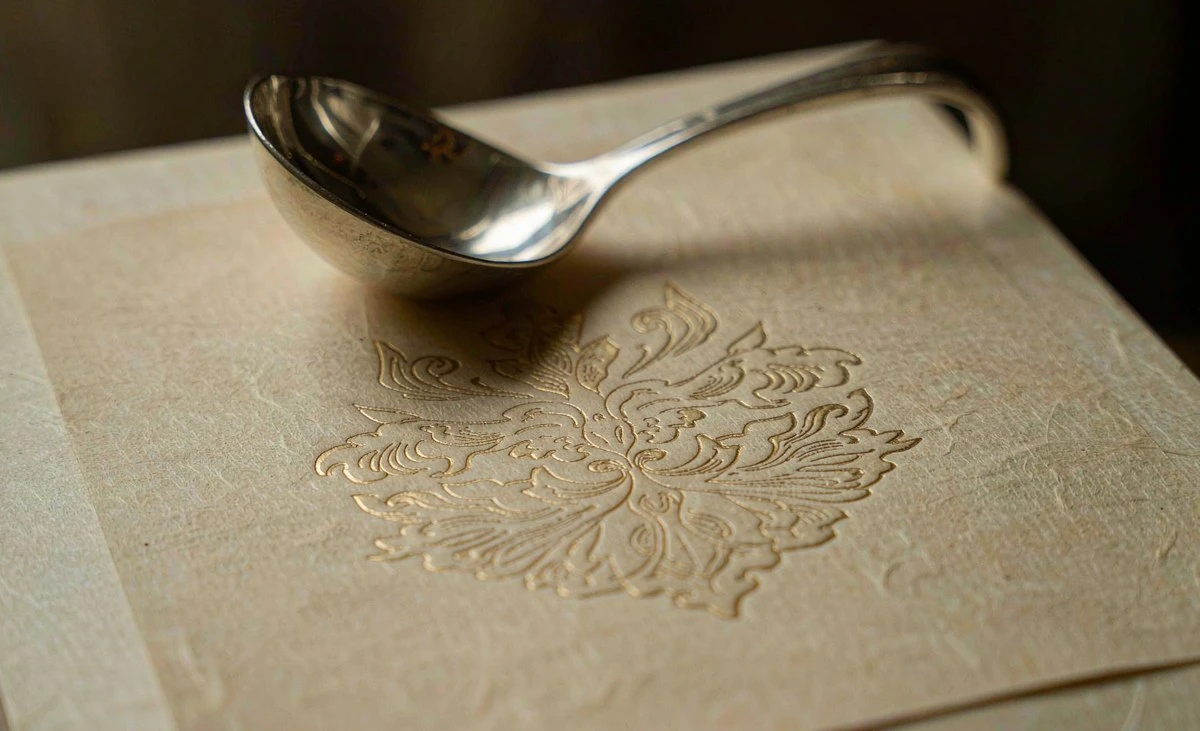
Tea branding lives in quiet, tactile detail rather than loud color. The techniques our tea clients request most:
- Offset printing on white or cream board for soft botanical artwork and accurate muted color.
- Hot foil stamping in gold or copper for a single leaf emblem or monogram; a small foil area reads as luxury without inflating cost.
- Embossing and debossing to give texture to mountains, leaves or patterns - tea buyers notice this with their fingers before their eyes.
- Soft-touch lamination on rigid gift boxes for a velvet feel; note that it can complicate recyclability claims, so use it selectively.
- Custom sticker labels for seasonal or small-batch runs, letting you buy plain canisters in bulk and change designs cheaply. Our custom sticker labels guide covers materials and adhesives for curved canister surfaces.
How Wholesale Production Works
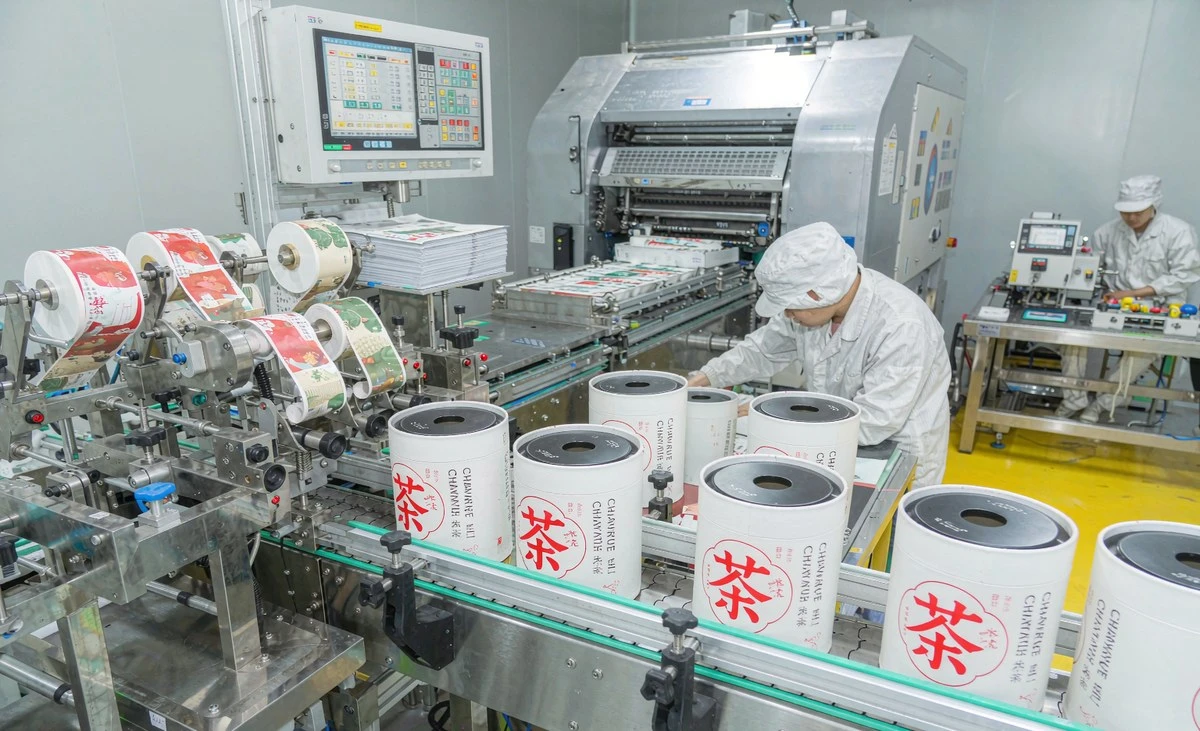
A typical wholesale order follows this sequence: dieline and artwork approval, food-contact liner selection, plate making or digital setup, printing, die-cutting, tube winding or box gluing, liner insertion, quality checks on lid fit and drop performance, then carton packing. Sampling takes about 5-10 working days and mass production 15-25 working days depending on quantity and finishing. Two cost drivers surprise first-time buyers: lid tooling for tubes (custom diameters need a mold) and multi-piece gift sets (each insert adds assembly labor). Both are worth negotiating at quotation stage, not after sampling.
Retail Display and Range Consistency
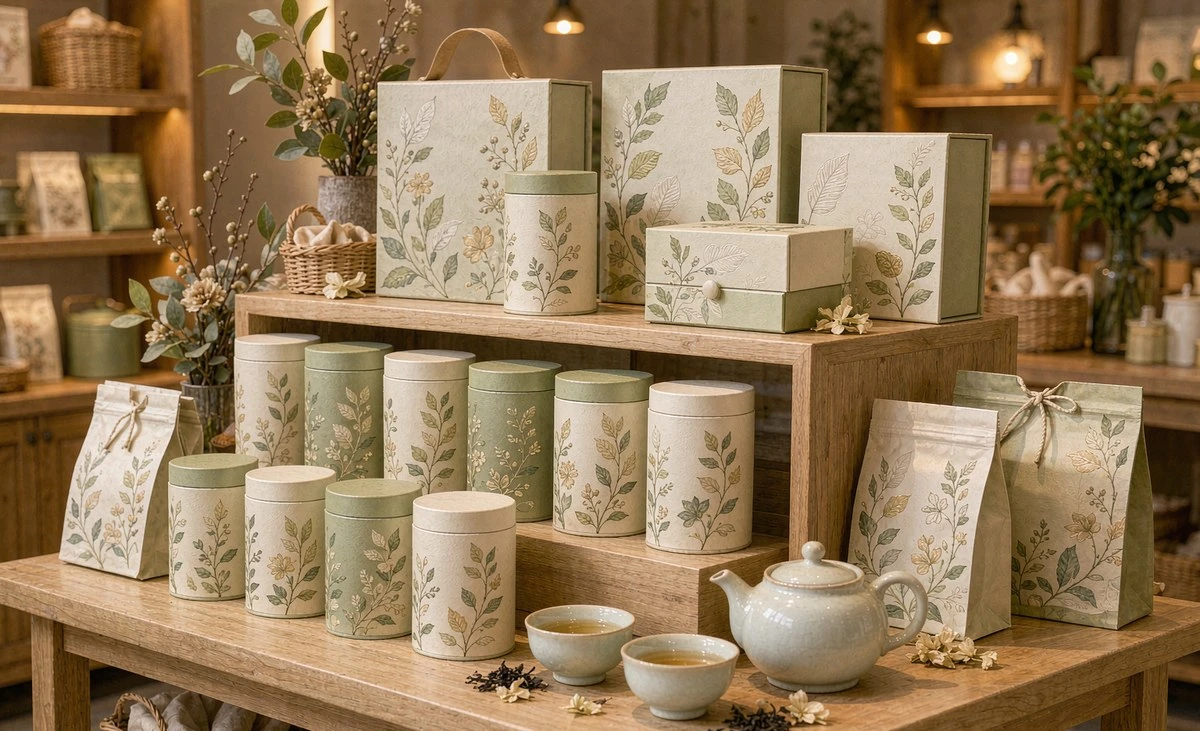
Tea ranges sell best when every format shares one visual system: the same botanical palette across canisters, gift boxes, pouches and window cartons, differentiated by size and format rather than by new artwork. When planning a full range, mock up the shelf before approving final artwork - photograph the lineup at eye level the way a shop assistant would stack it. A range that photographs as one family converts better than a collection of individually beautiful packs. If you are building out an entire packaging system across tea, coffee and accessories, our custom packaging service page explains how we manage dielines, sampling and production for complete product lines.
Wholesale Buying Checklist
- Define tea category, weight per unit, and whether the pack is the barrier or pairs with tins and sachets.
- Choose formats per price tier: canister or pouch for core range, rigid gift box for gifting.
- Specify liner or food-contact layer and request compliance documentation.
- Approve a physical pre-production sample, checking lid seal strength and window registration.
- Confirm export packing: carton counts, drop tests and pallet configuration for sea freight.
Frequently Asked Questions
What is the typical minimum order quantity for custom tea packaging boxes?
For printed folding cartons and window boxes, MOQs usually start around 1,000-5,000 units depending on size. Paper tube canisters often start near 3,000-5,000 units because of lid tooling. Rigid magnetic gift boxes commonly start at 500-1,000 units. Small brands can bridge the gap with stock canisters plus custom sticker labels.
Can a paper tube really keep tea fresh?
Yes, provided it has a proper barrier system: an aluminum foil or food-grade liner inside the tube, an airtight lid, and ideally a sealed inner bag. The paper shell gives structure and branding; the liner does the freshness work. A bare paper tube with no liner will not protect aroma.
How many grams of loose leaf fit in a standard canister?
A 65 x 120 mm tube holds roughly 50-70 g of rolled oolong or black tea; a 90 x 150 mm tube holds 100-150 g depending on leaf style. Always verify with your actual tea, since leaf bulk density varies widely between categories.
Can I order mixed formats in one production run?
Yes. Mixing a rigid gift box, two canister sizes and a pouch in one order is common; each item ships on its own lead time within the same purchase order. Combining formats usually improves freight utilization and gives you one point of quality control.
Tea packaging succeeds when it protects a delicate product and quietly tells a story at the same time. Whether you need 2,000 canisters for a new blend or a full holiday gift program of rigid boxes, tins and pouches, we can quote the complete set. Explore our product range or contact the team through custom packaging to request samples, or browse ready-made styles on our products page to start your tea packaging project today.