
Coffee is one of the most demanding products a packaging converter ever handles. Beans keep releasing carbon dioxide for days after roasting, they absorb moisture and odors from the surrounding air, and the whole purchase decision is made at a shelf or on a product page where the bag has roughly three seconds to earn a spot in the cart. That combination of barrier science and branding pressure is why coffee packaging has become its own design discipline. This guide walks through the main formats - valve bags, stand-up and flat-bottom pouches, paper boxes and tins - and explains the materials, closures and printing decisions that go into a custom coffee packaging project.
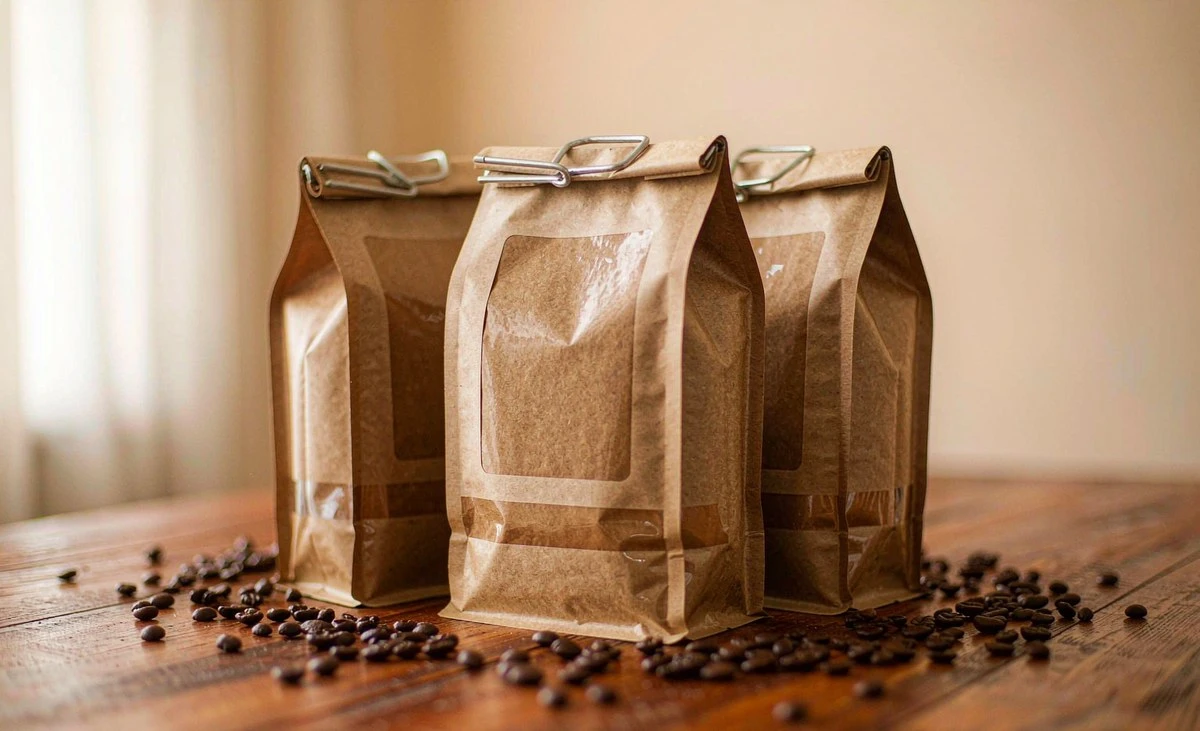
Why Fresh Roasted Coffee Needs Special Packaging
Freshly roasted beans degas carbon dioxide for roughly one to two weeks. If that gas is trapped inside a sealed bag, pressure builds until the seal fails or the bag balloons. At the same time, oxygen creeping into the bag stales the beans, and light, heat and humidity accelerate the decline. Coffee packaging therefore has to do two opposite things at once: let CO2 escape while keeping oxygen out.
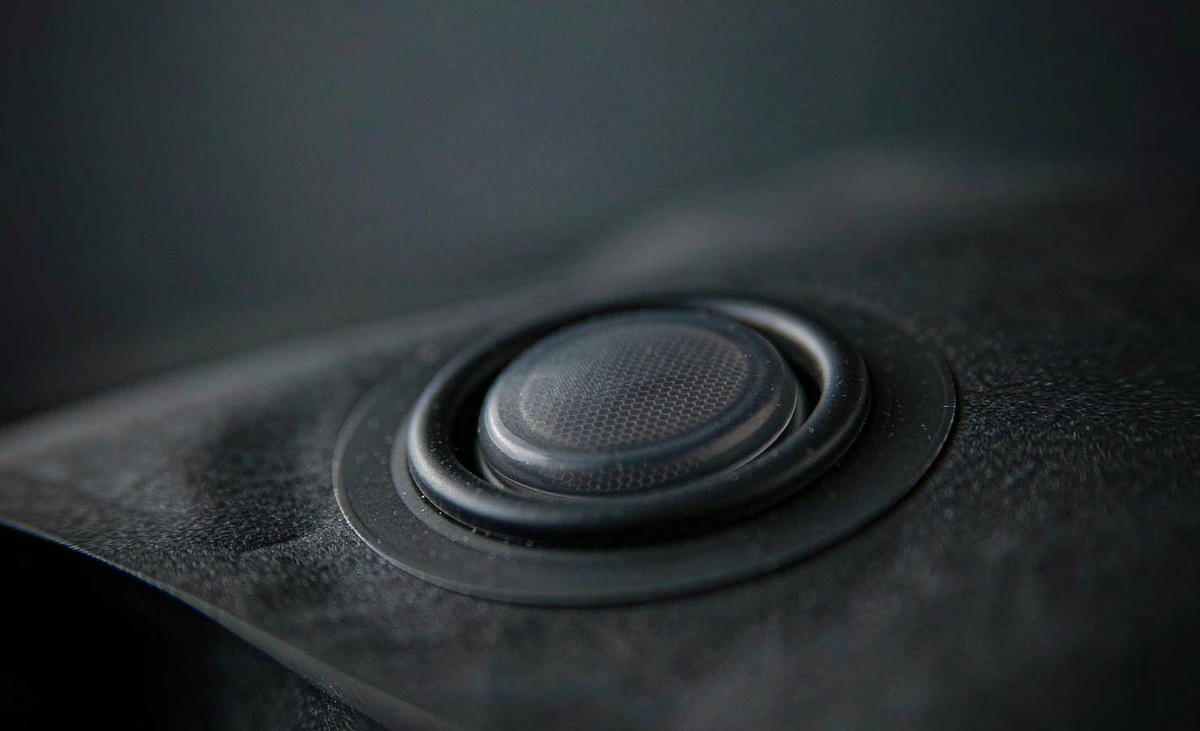
- One-way degassing valves. A small circular valve bonded into the film lets CO2 escape while blocking outside air - the single most important component on a coffee bag.
- High-barrier laminates. Multi-layer films with foil or metallized layers keep oxygen transmission rates low enough for weeks of shelf life.
- Light protection. Matte black, matte kraft or opaque films prevent UV damage; clear windows are attractive but sacrifice some shelf life.
- Re-closability. Zipper seals, tin-ties and press-to-close strips keep the remaining beans fresh after the first opening.
One-Way Valves: Small Part, Big Consequences
The degassing valve looks like a simple plastic disc, but its geometry matters. Inside the valve is a membrane that opens under pressure from inside the bag and closes when external pressure pushes in. If you pack beans immediately after roasting - which many roasters do to save a day of resting - a valve is mandatory. Without one, the bag must be left open for 24 to 48 hours first, or the seal will pop.
Practical specification notes:
- Valves are heat-bonded through a punched hole in the film, usually on the front face just below the fold.
- Valve placement should avoid printed ink coverage where possible, or use ink-free zones specified in your artwork.
- Test valve performance with your own roast profile; oily dark roasts degas more aggressively than light roasts.
- Some roasters skip the valve and use vent holes for very short shelf-life retail, but for anything beyond a week, specify a valve.
Choosing the Bag Format
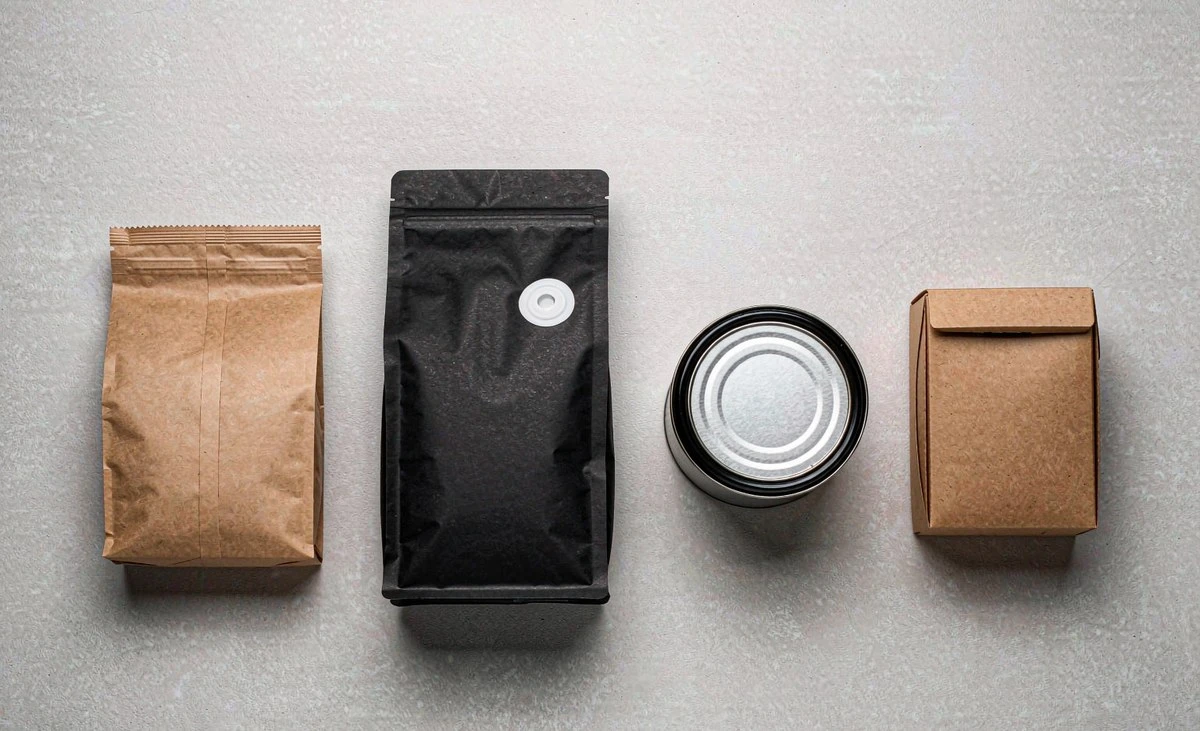
Most coffee brands choose among four dominant formats. Each has a distinct shelf presence and cost structure.
| Format | Best For | Key Traits |
|---|---|---|
| Side gusset bag | Classic 250 g / 1 lb retail bags | Traditional coffee silhouette, low unit cost, needs a label or printed film |
| Stand-up pouch | Shelf display, e-commerce | Stable base, large printable front panel, zipper and valve friendly |
| Flat-bottom pouch | Premium specialty roasters | Box-like silhouette, five printable panels, rigid feel, higher cost |
| Paper box / tin | Gift sets, café counters, subscriptions | Excellent structure and print, usually holds a bag inside |
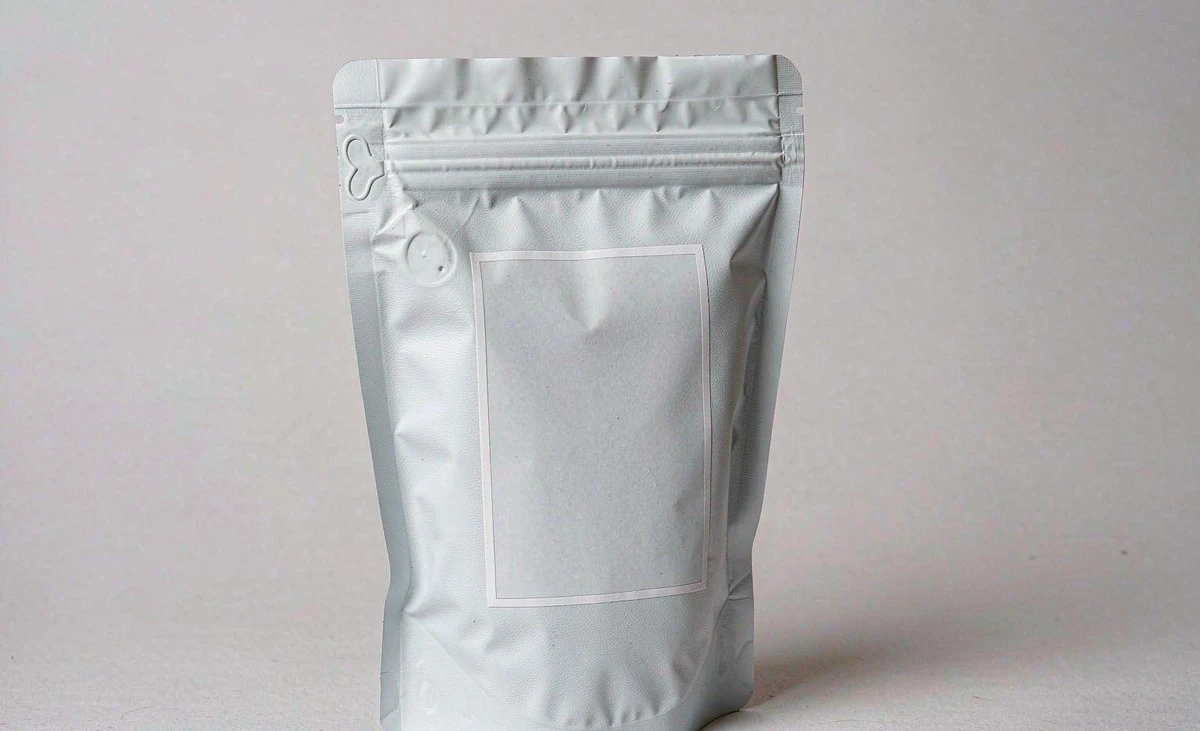
Flat-bottom pouches have become the specialty coffee standard because their rectangular silhouette stands like a box, accepts prints on five panels, and photographs cleanly for online stores. Stand-up pouches remain the workhorse for value lines and larger 1 kg bags. For brands that want an all-paper story, kraft paper outer bags - often laminated to a thin barrier layer inside - deliver the natural look; our overview of custom kraft paper bags covers how unbleached kraft behaves in printing and lamination.
Barrier Layers: Paper, Foil and the Laminates Between
A coffee bag is almost never a single material. It is a laminate engineered layer by layer:
- Print layer. The outside surface - kraft paper, white paper or PET film that receives ink.
- Barrier layer. Aluminum foil or a metallized (VMPET) layer that blocks oxygen, moisture and light almost completely.
- Seal layer. A heat-sealable food-grade PE or CPP film on the inside.
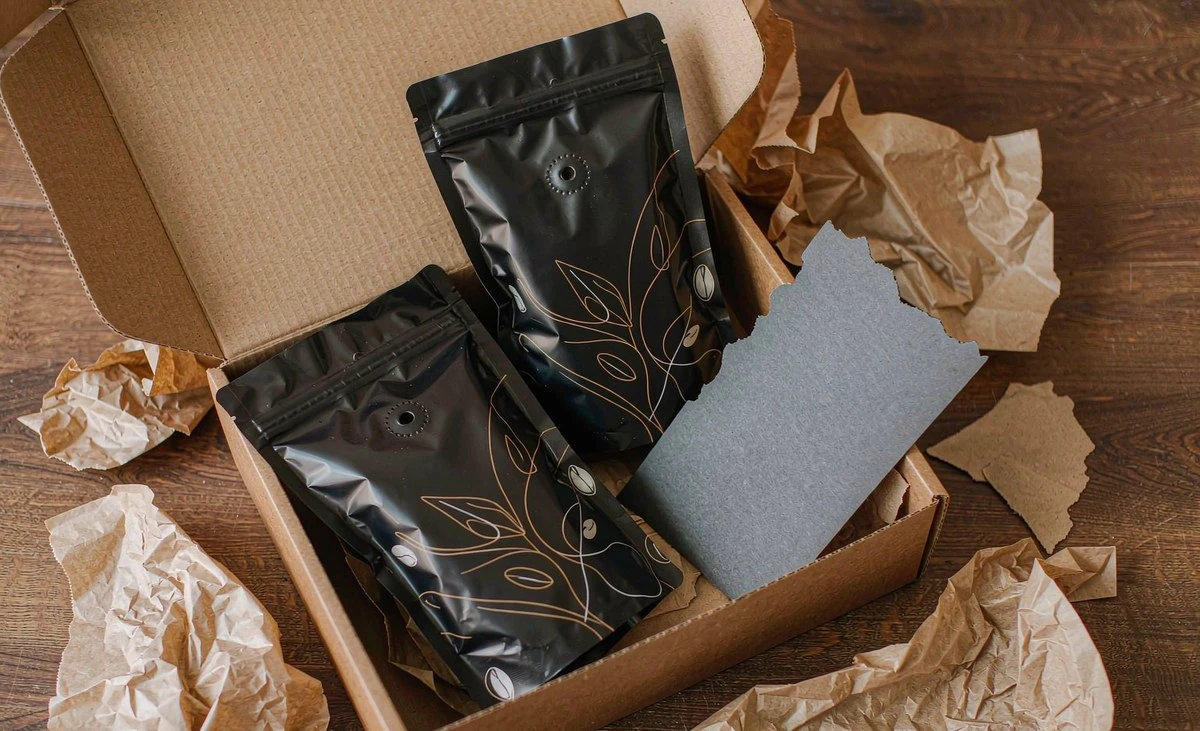
Typical constructions for specialty coffee: kraft paper / VMPET / PE for a natural look with solid barrier, or PET / AL / PE for maximum shelf life in export shipping. Fully plastic mono-material recyclable laminates are improving every year, and many roasters now accept slightly shorter shelf life in exchange for a recyclability claim. When a pure paper look matters, some brands move the barrier job into a rigid outer package - a paper box holding a valve bag inside, a structure common in gift sets and subscription kits.
Print, Labels and Branding on Coffee Bags
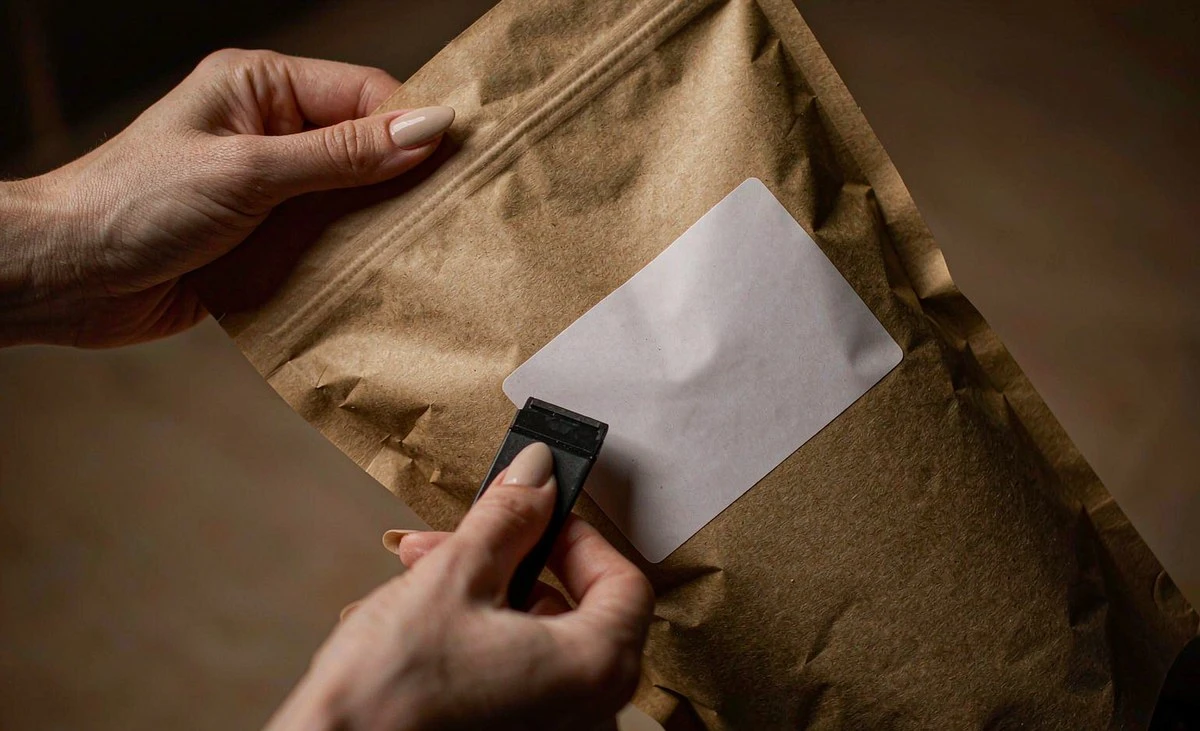
Coffee branding leans heavily on matte surfaces, spot colors and tactile finishes. Digital printing has changed the economics for small roasters: instead of 20,000 pre-printed film rolls, a roaster can order blank pouches and apply custom printed stickers per batch.
Three common branding routes:
- Custom printed film or paper. Full-color artwork baked into the laminate - best at volumes above roughly 5,000 bags per SKU.
- Blank bags plus sticker labels. Buy plain stock, print batch-specific labels - our guide to custom sticker labels for packaging explains materials and adhesives suited to film and kraft surfaces.
- Embossed or debossed paper. For rigid boxes and premium kits, a blind emboss adds depth without ink.
Whatever the route, plan label artwork for curved surfaces - keep text away from bag edges, and choose adhesives rated for the film's surface energy. Matte laminate over kraft print makes colors slightly warmer and darker than on glossy white stock, so request a printed proof on the actual material before mass production.
Paper Boxes, Tins and Gift Structures
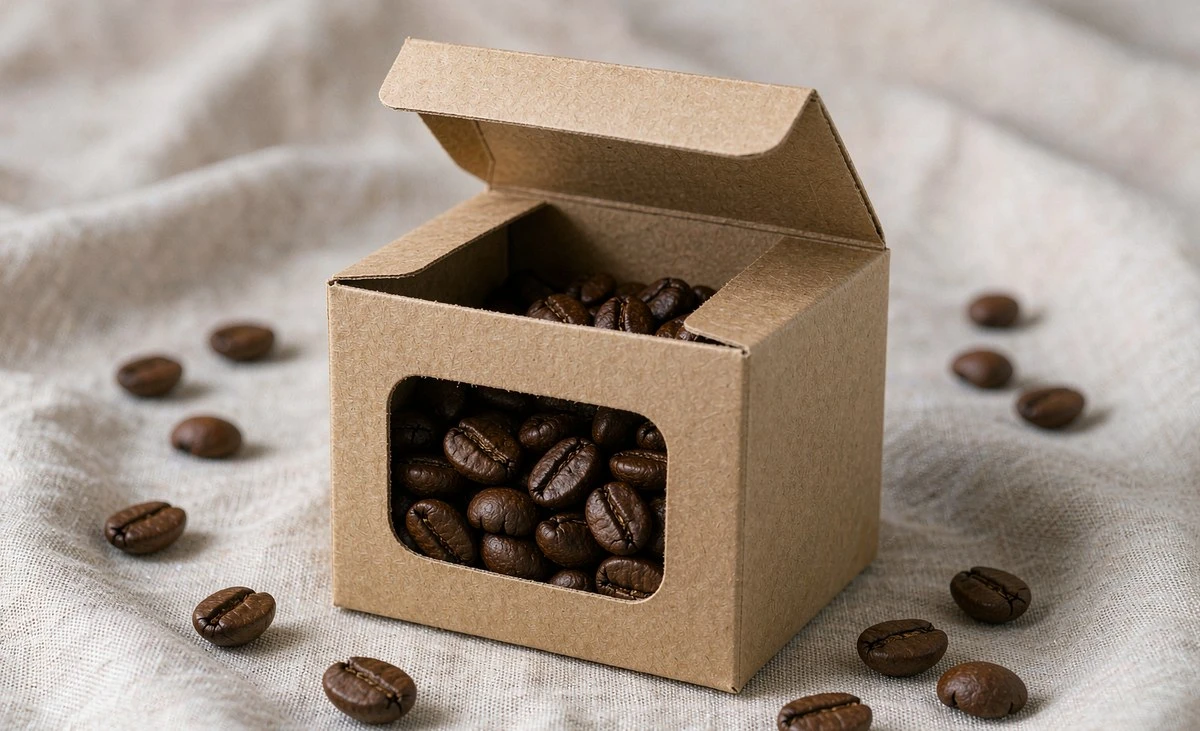
Boxes and tins sit one level above bags: they carry more structure, protect the bag inside, and open branding space on five faces plus a lid.
Typical uses:
- Café counter sales. A rigid kraft box with a window sells whole-bean gift purchases next to the till.
- Subscription and gift sets. A mailer box holds two or three valve bags plus a brew card - see how mailer structures work in our corrugated mailer box guide.
- Mixed formats. A coffee tube or cylinder can replace the box for premium single-origin SKUs; round structures photograph distinctively.
Boxes designed to hold bags need internal dimensions checked against the filled bag, not the empty one - a 250 g bag with beans bulges several millimeters past its flat-state height, and a tight box will fight the packing line.
Production: From Roast Day to Sealed Bag
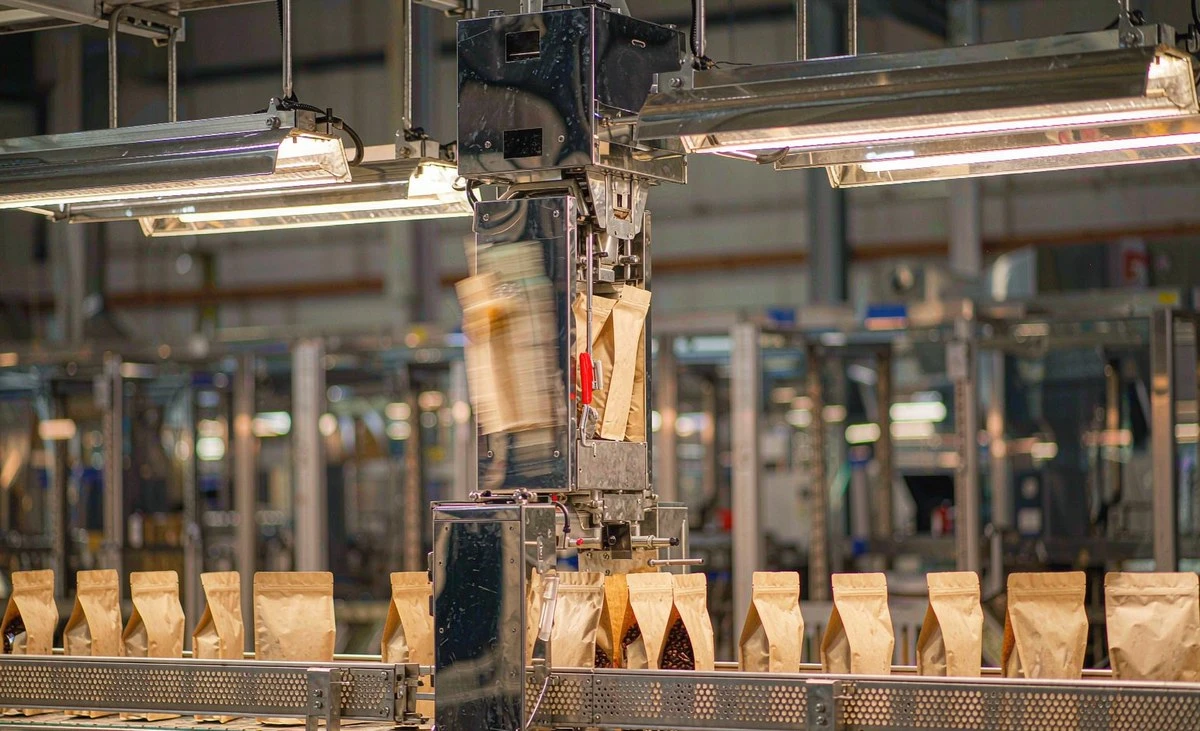
Most coffee bags are produced on vertical form-fill-seal (VFFS) machines or pre-made pouch filling lines. Pre-made pouches with valves are filled, nitrogen-flushed in many setups, then heat-sealed across the top. Small roasters often seal with a simple band sealer; larger operations integrate weighing, filling, sealing and date coding into one line.
Spec notes that prevent production headaches:
- Confirm your sealer temperature works with the bag's PE seal layer - laminates with thick kraft outer layers need more heat than all-plastic bags.
- State the filled weight range and bag dimensions in the specification so gussets and valve placement align with your machine's grippers.
- If labels are applied in-line, align label placement with the valve so the two never overlap.
- Request food-grade certification documents for the seal layer, especially for export to the EU or US.
Format Comparison at a Glance
| Criterion | Side Gusset | Stand-Up Pouch | Flat-Bottom | Box / Tin |
|---|---|---|---|---|
| Shelf presence | Classic, familiar | Good, leaning front panel | Best - rigid box-like silhouette | Strongest structure and print |
| Printable area | Two panels | Front + back | Five panels | Six faces plus lid |
| Barrier via laminate | Excellent with foil layer | Excellent | Excellent | Bag inside provides barrier |
| Unit cost | Lowest | Low to medium | Medium to high | Medium to high |
| MOQ reality | Rolls of pre-printed film | ~5,000 printed; blank stock lower | ~5,000 printed | ~1,000-3,000 typical |
Sustainability Choices That Hold Up
Coffee buyers read packaging claims closely, so keep them accurate. Recyclable mono-PE laminates are widely available now; kraft paper looks with an inner barrier are honest when the paper is described as the outer layer rather than the whole bag. Compostable bags exist but usually require industrial composting and trade off barrier performance. Certification marks - FSC for paper, or recycling symbols - should be backed by documentation; the fibre-source standard is maintained by the Forest Stewardship Council, and coffee-specific sustainability guidance is published by the Specialty Coffee Association. Avoid printing "biodegradable" on laminates with foil layers - the claim will not survive scrutiny.
Cost Drivers and Where to Save
A coffee packaging budget splits roughly into materials, printing, valves and closures, and freight. The highest-leverage decisions:
- Stock sizes beat custom dielines. Standard 250 g / 500 g / 1 kg pouch dimensions avoid tooling and run on any filler.
- Digital labels beat short-run film printing. Below ~5,000 bags per SKU, blank stock plus stickers is almost always cheaper per unit.
- Mattes hide imperfection. Matte laminates make minor registration drift invisible; gloss shows everything.
- Order together. Combining SKUs into one print run shares plate and setup costs across roast profiles.
Bringing It All Together
A sensible first project for a growing roaster looks like this: standard-size flat-bottom or stand-up pouches in kraft / VMPET / PE laminate, one-way valve, zipper closure, blank stock with digitally printed sticker labels for the first three SKUs, then a move to custom printed film once volumes justify it. Add a kraft window box for the café counter and a mailer kit for subscriptions as sales channels mature.
Coffee packaging rewards the details: a valve placed correctly, a laminate matched to shelf life targets, labels that survive curved surfaces, and a structure that makes the beans look as good as they taste. Specify those four things well and the rest of the project - sampling, sealing, shipping - falls into place.