
Jewelry is one of the few product categories where the box is part of the product experience. A customer who receives a ring in a flimsy, poorly finished box remembers the disappointment longer than the design inside it. For jewelry brands, studios and e-commerce sellers, choosing the right custom jewelry box is therefore not a cosmetic decision - it protects high-value goods, frames the unboxing moment and quietly carries the brand story. This guide walks through the box structures jewelry brands order most often, insert options, materials and finishes, wholesale production details such as MOQ and lead time, and the mistakes that are easiest to avoid before a purchase order is signed.
Why Custom Jewelry Boxes Matter for Jewelry Brands
Jewelry packaging has to solve three problems at once. First, protection: rings, earrings, necklaces and watches are small, dense and expensive, so the box must resist crushing in transit and keep pieces from tangling or scratching each other. Second, presentation: the box is the first physical touchpoint a customer has with the brand, and in gift-giving situations it is displayed on a table or handed over in a store. Third, storytelling: interior printing, foil emblems and textured papers turn a few square centimeters of paperboard into brand equity.
Generic stock boxes fail all three tests - they rarely fit the product dimensions, and a wrong-sized ring slot or pendant hook is the most common cause of returns complaints. Custom production starts from the exact dimensions of the piece, which is why most serious jewelry brands move to made-to-order packaging as soon as volume justifies tooling costs. If you are building a full luxury packaging range, our guide to custom packaging services explains how different product lines share one material and branding system.
Common Box Structures and When to Use Them
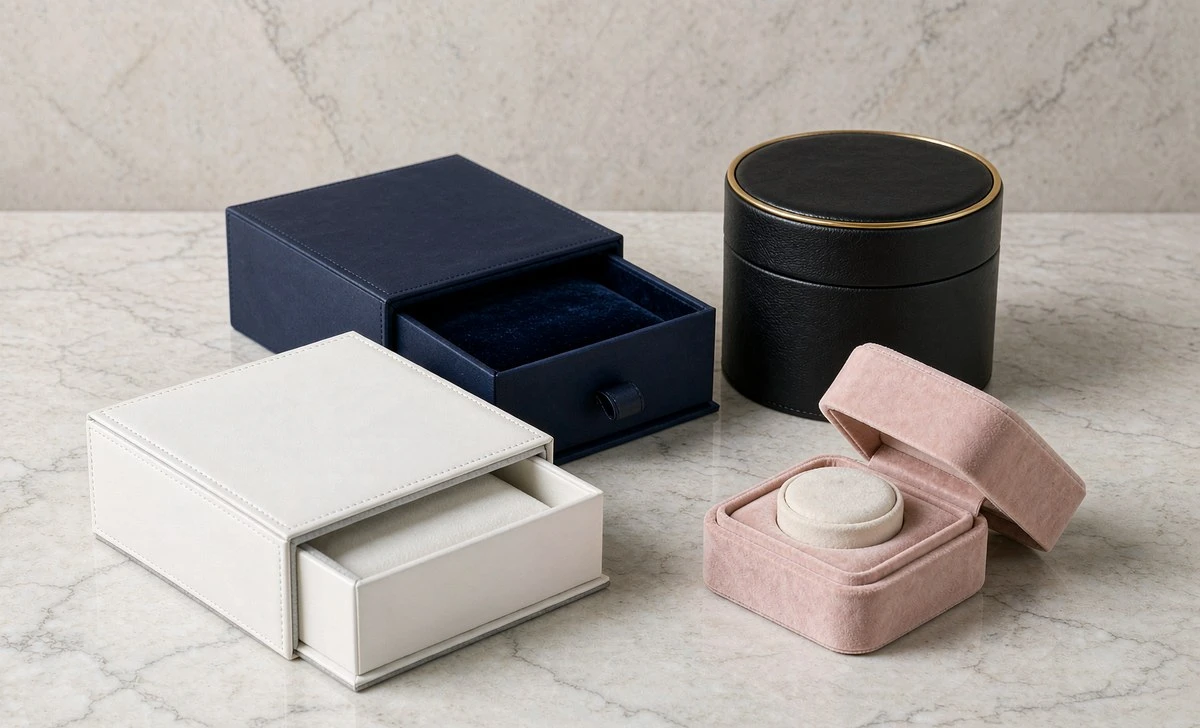
Jewelry brands typically order five structures. Each has a different cost profile and ships differently, so the choice affects freight as much as design.
Two-piece rigid boxes (lid and base)
The classic gift format: a thick grayboard base and a lift-off lid wrapped in printed or specialty paper. It feels substantial, holds rings, earrings and pendants well, and works for both retail counters and e-commerce shipping. It is the most economical rigid option because tooling is simple and assembly is fast.
Magnetic closure boxes
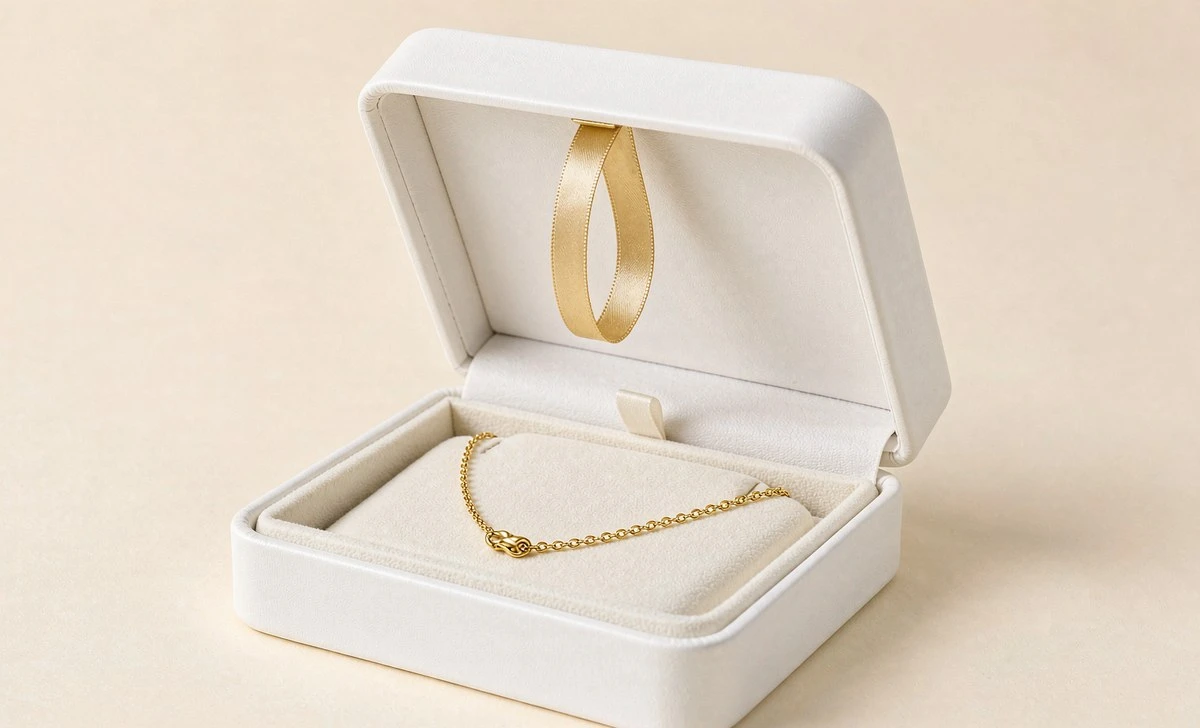
A hinged lid with embedded magnets that snap shut. The opening moment is the selling point - the lid swings open smoothly and the piece is revealed - which is why this structure dominates engagement rings and premium gifting. The trade-off is a higher unit cost and a box that cannot be flattened for shipping.
Drawer-style boxes
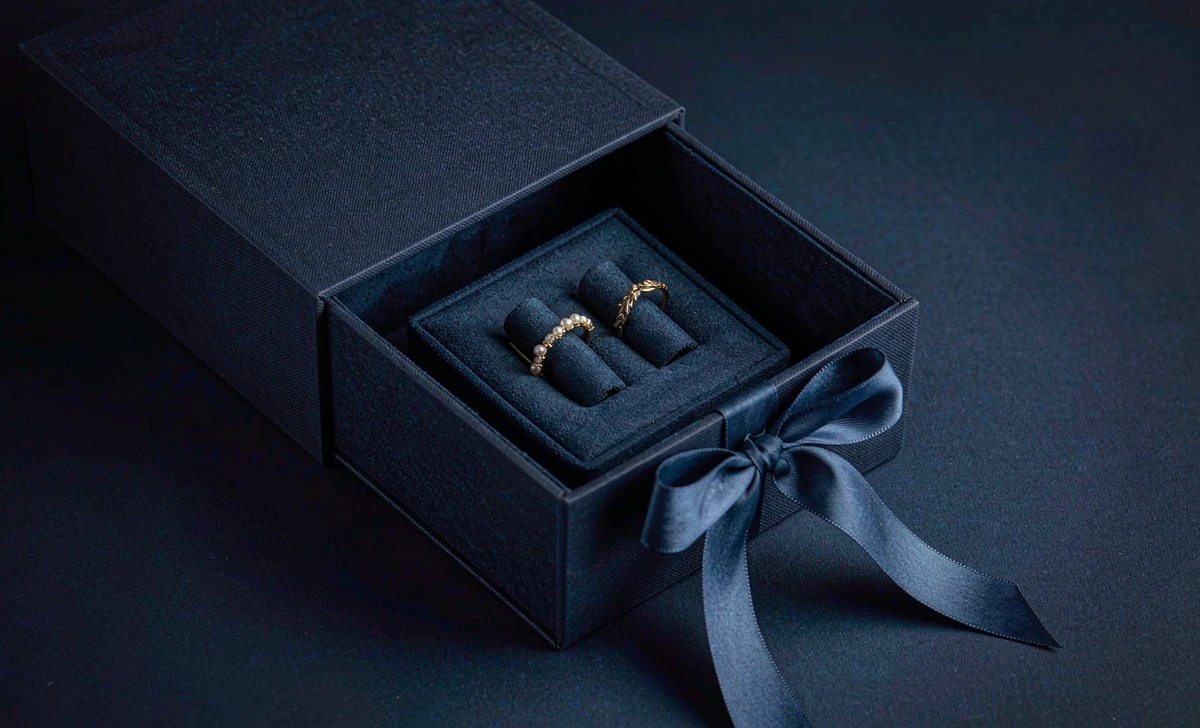
An outer sleeve with an inner tray that slides out, usually guided by a ribbon finger pull. Drawer boxes suit sets - a tray can hold a ring, earrings and a pendant side by side - and the sliding action photographs beautifully for social media. Costs are higher because two components must be assembled precisely.
Small ring and pendant boxes
Compact one-piece or hinged formats designed around a single insert. They are inexpensive enough to include free with every order, and many brands print a secondary design, such as a wedding-collection emblem, on the inside lid.
Folding magnet and flat-pack boxes
Pre-glued boxes that arrive flat and pop into shape in seconds. They cut inbound freight dramatically - one carton of flat-packed boxes replaces eight to ten cartons of pre-assembled ones - which matters for brands importing across continents. To see how the same rigid construction behaves for another beauty category, read our buyer's guide to custom rigid boxes for cosmetics, where greyboard thickness and wrap paper choices are covered in depth.
Inserts: Foam, Velvet and Molded Pulp Compared
The insert is where most quality problems live, so treat it as a specification, not an afterthought. The three common options:
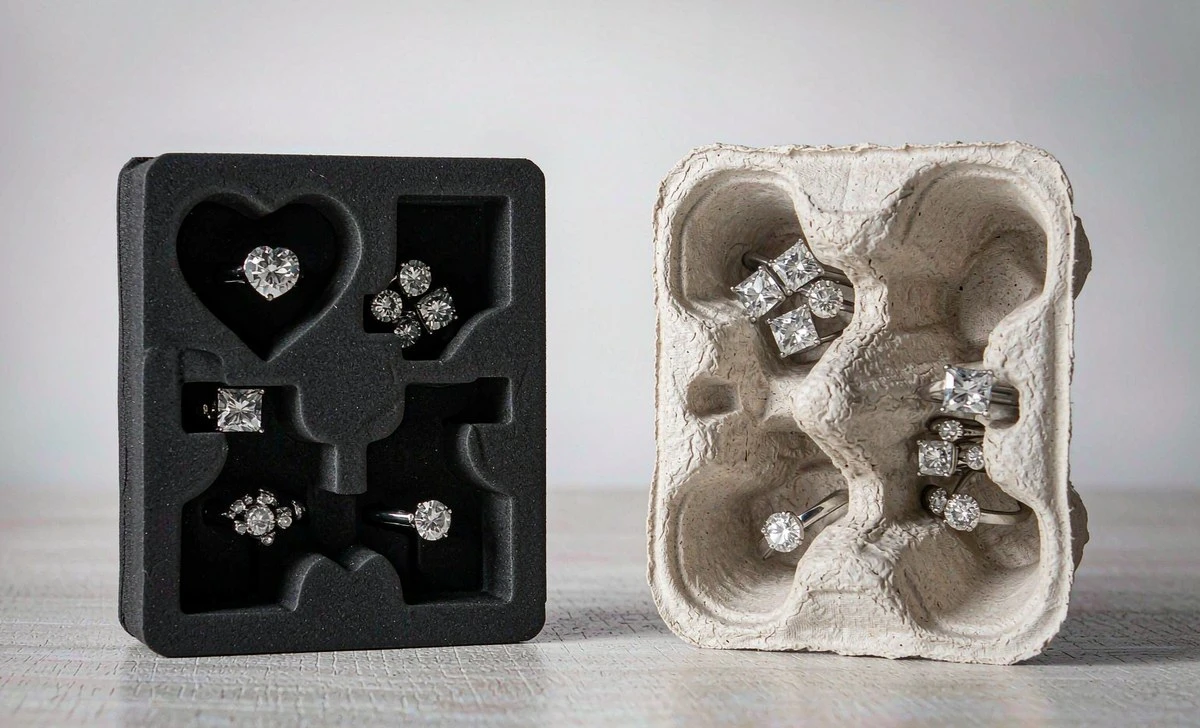
- Die-cut foam (EVA or PU). Precise slots cut to your product dimensions, available in many densities and colors. Holds rings and earrings rock-solid; the downside is that foam is harder to recycle and brands with sustainability commitments increasingly ask for alternatives.
- Velvet or flocked vacuum-formed trays. A molded tray with a soft flocked surface. Elegant appearance, good for chains and necklaces that need curved channels, mid-range cost.
- Molded pulp and cardboard inserts. Recyclable, print-friendly and increasingly popular with eco-conscious labels. Slots are slightly less knife-edge precise than foam, so pieces need dimensioning care.
A practical rule: use foam or flocked trays for items above roughly $300 retail value where perceived luxury is critical, and pulp or cardboard inserts for fashion jewelry and high-volume SKUs where the sustainability story matters more. Always request a physical sample with your actual product inside - photographs hide slot tolerances.
Materials, Board Thickness and Finishes
Rigid jewelry boxes are built from grayboard (recycled paperboard) wrapped with decorative paper. Thickness typically runs from 1.0 mm for small ring boxes to 2.5 mm for large necklace and watch boxes; thicker board raises both cost and shipping weight, so match it to box size rather than defaulting to the heaviest option. Wrap papers range from coated art paper for full-color printing to uncoated specialty papers, kraft and textured Japanese-style papers that add tactility.
Finishes carry the luxury signal:
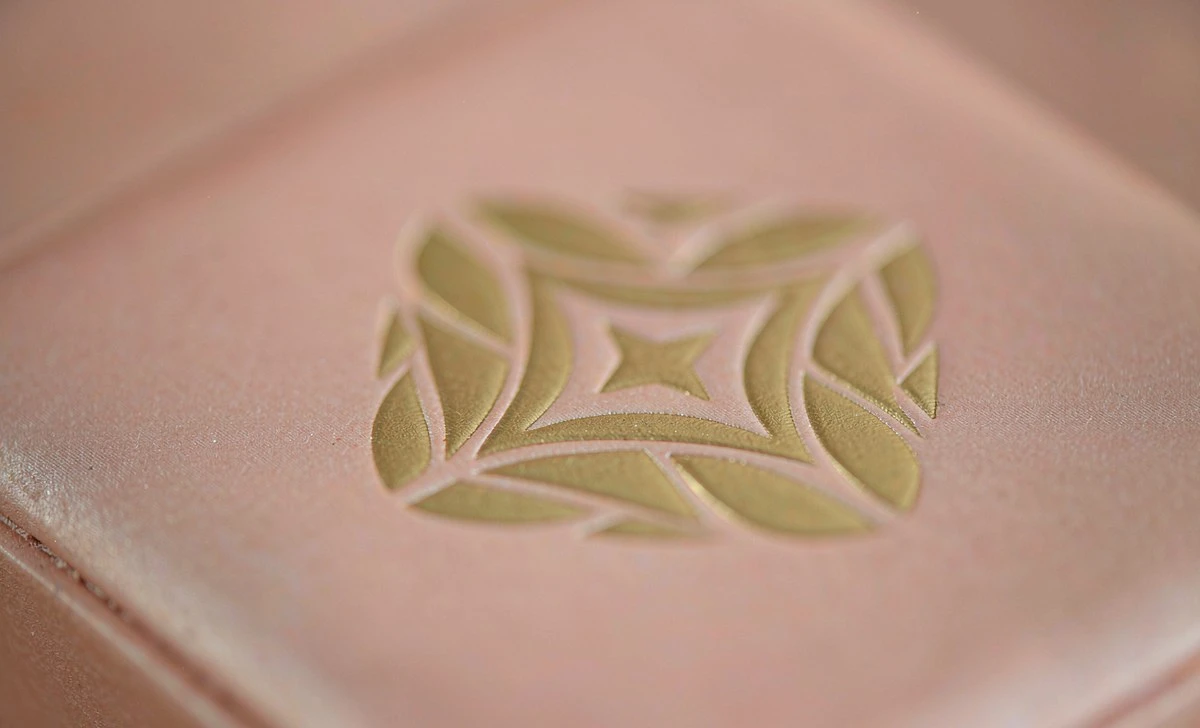
- Hot foil stamping. Gold, silver, rose gold or matte metallic foil for logos and emblems; the single most cost-effective premium upgrade.
- Soft-touch lamination. A velvet-feel coating that photographs as matte and resists fingerprints - popular on black and navy boxes.
- Debossing and blind embossing. Tactile relief without ink or foil, understated and elegant.
- Spot UV. Gloss highlights on a matte background for contrast logos.
Printing, Branding and Labels
Branding usually combines one or two printed elements with a finish: an exterior logo in foil, interior printing for a collection message, and a pattern on the insert. Brands that release seasonal collections often use custom sticker labels on a neutral box instead of reprinting - the same box serves every season, and a new label design signals the collection at a fraction of the cost. Keep artwork in vector format, specify foil colors by Pantone metallic reference, and remember that small foil details under 0.3 mm may not transfer cleanly; a printed proof settles this in minutes.
How Wholesale Production Works: MOQ, Lead Time and QC
Wholesale jewelry box production is genuinely wholesale: unit prices fall sharply once quantities cover setup costs. Typical MOQs run 500 to 1,000 pieces per design, though simple stock-size structures can start lower. Lead times are usually 7 to 10 working days for a pre-production sample and 15 to 25 working days for mass production, depending on specialty papers and finish complexity.
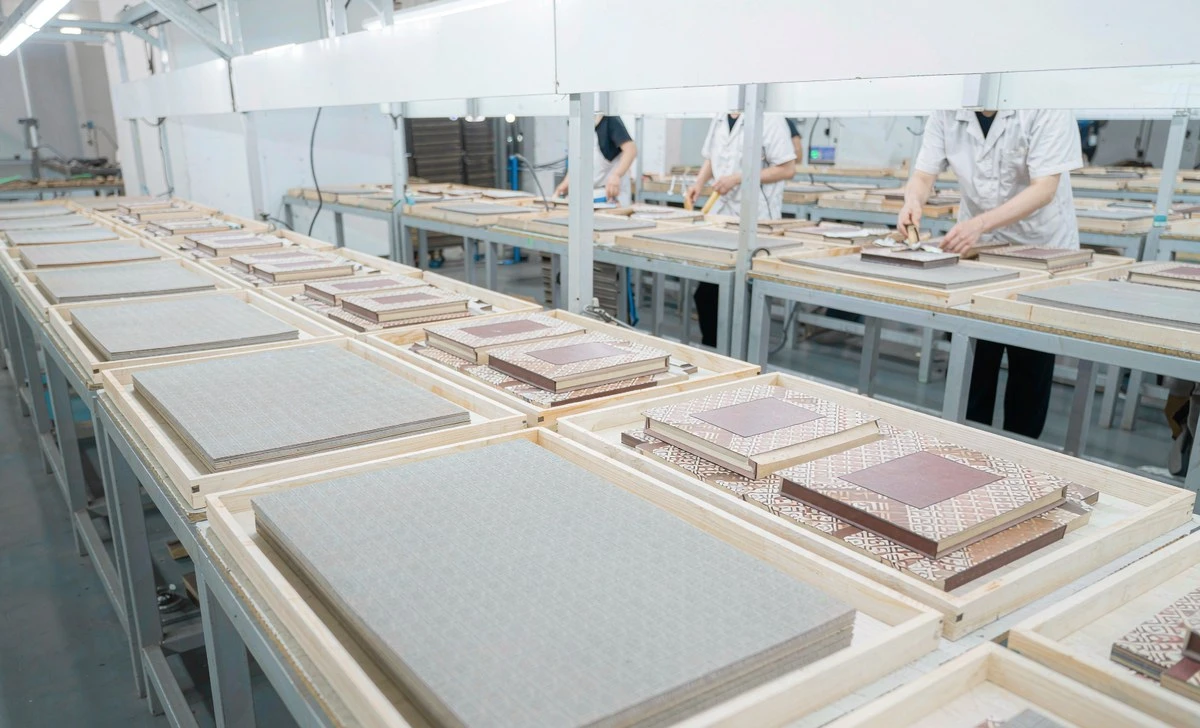
Quality control focuses on four checkpoints: magnetic strength and hinge alignment, wrap paper bonding without bubbles or glue marks, insert fit against the real product, and color consistency between the sample and the production run. Ask for photos or videos of the sample sign-off process - reputable factories document it automatically.
Sizing, Protection and Shipping Checklist
Before approving production, run through this list:
- Measure each product with its own accessories (chains, tags, polishing cloths) that must fit inside.
- Define insert slot dimensions to 0.5 mm and confirm with a physical sample.
- Decide the shipping configuration: fully assembled boxes ship in master cartons; flat-pack formats need one assembly trial before ordering in volume.
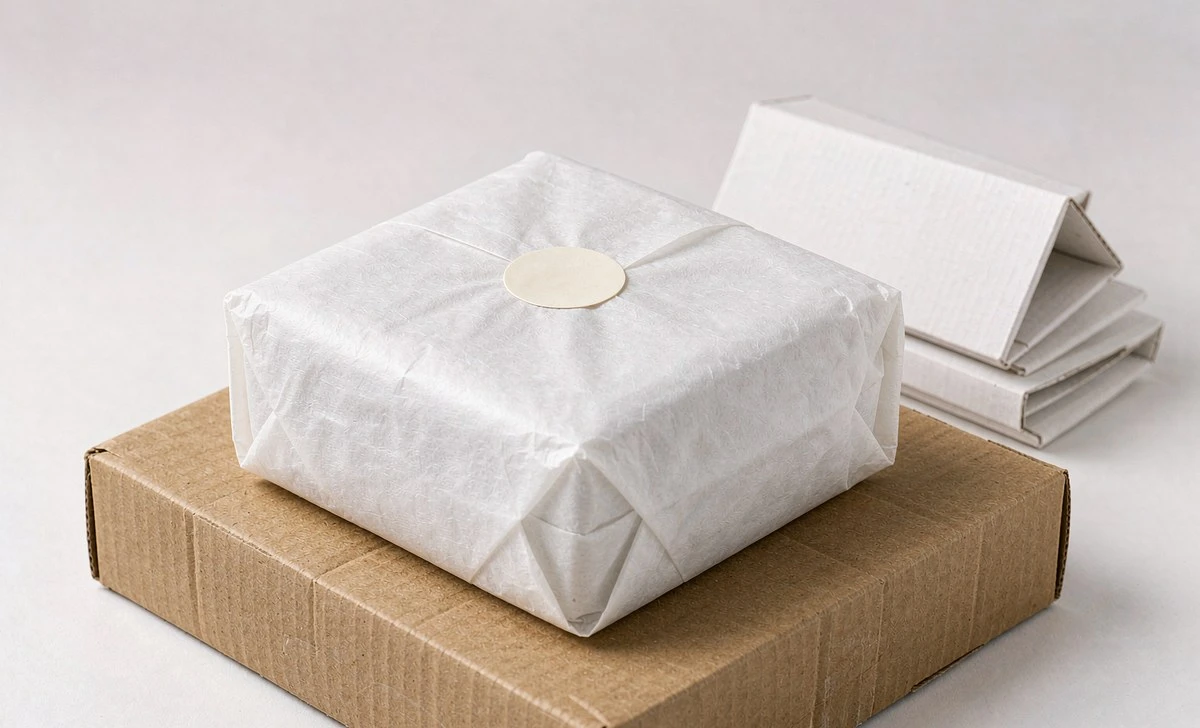
- Check whether a tissue wrap and outer sticker seal are needed - they add hygiene and an extra unboxing layer at negligible cost.
- Estimate carton dimensions and freight volume early; rigid boxes are bulky and dimensional weight rules air freight pricing.
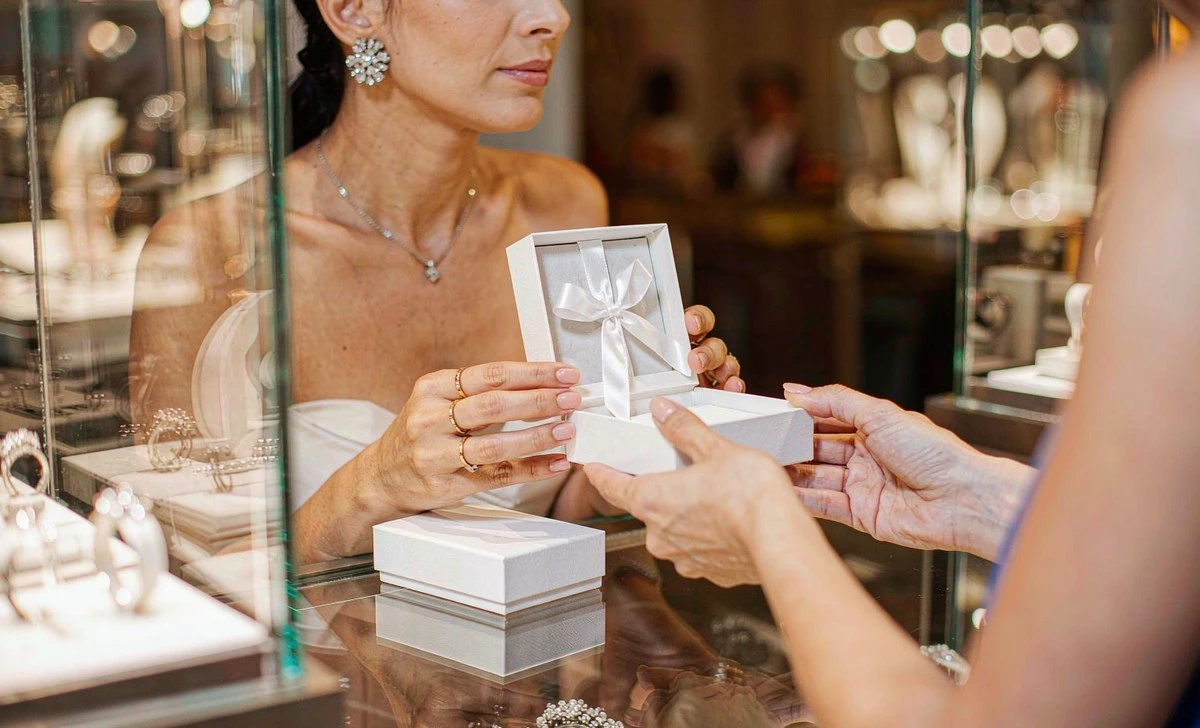
For gift-focused brands, a boutique handover scene is worth designing for: the box should look complete without gift wrap, because most buyers will not re-wrap it.
Sustainability Claims Jewelry Brands Can Make
Paper-based jewelry packaging is recyclable when inserts, magnets and ribbons are considered: specify removable inserts, avoid metallized plastic laminates, and the whole box can enter the paper stream. If sourcing certified fiber matters to your market, specify paper from certified forestry - the FSC certification system is the most widely recognized and can appear on the box once the supply chain is certified. Be equally careful with green marketing language: the US FTC Green Guides require environmental claims to be specific and substantiated, and vague wording such as "100% eco-friendly" creates regulatory risk in the US and EU alike.
A final production tip for e-commerce orders: wrap the box in printed tissue and seal with a round brand sticker. It protects the finish during last-mile delivery and doubles the branding layers the customer peels through.
Frequently Asked Questions
What is the typical MOQ for custom jewelry boxes wholesale?
Most factories set 500 to 1,000 pieces per design for fully custom rigid boxes. Stock-size structures with printing-only customization can start around 300 pieces. If you need lower volumes, combine designs into one order by sharing a board thickness and wrap paper, or use sticker labels to differentiate collections.
How long does a custom jewelry box order take?
Expect 7 to 10 working days for a pre-production sample and 15 to 25 working days for mass production. Specialty papers, foil dies and drawer constructions sit at the longer end. Build shipping time on top - sea freight from Asia to the US typically adds 25 to 40 days.
Which insert is best for rings and earrings?
Die-cut foam holds small pieces most securely because slots can be cut to 0.5 mm tolerance. Flocked vacuum trays suit curved items like chains. Molded pulp works well for fashion jewelry and eco-focused brands, provided slot dimensions are validated with a physical sample.
Can jewelry boxes ship flat to save freight?
Yes. Folding magnet boxes and some two-piece designs ship flat and assemble in seconds, cutting inbound carton volume by 60 to 80 percent. Confirm assembly is glue-free and test one carton end to end before committing to the format.
How do I keep costs down without making the box look cheap?
Spend on what the hand touches: a modest board thickness with a good specialty paper and one foil emblem reads more premium than full-color printing on thin board. Neutral wrap papers cost less than custom-printed ones, and interior inserts can use economical materials while the lid carries the finish.
Ready to specify your jewelry packaging? Explore our custom packaging capabilities to see structures, materials and finishing options in one place, or browse the products catalog to find the formats closest to your range, then request a quote with your artwork and product dimensions for a fast, accurate proposal.